

🔥 Attapulgite (Sea Water Bentonite) for Offshore Drilling – 7 Powerful Benefits for High-Performance Mud Systems
Why Attapulgite (Sea Water Bentonite) for Offshore Drilling Performs in High Salinity
Traditional bentonite requires freshwater to swell. When exposed to seawater, chlorides, magnesium, and calcium collapse its structure, destroying fluid stability. This leads to:
Low viscosity
Poor gel development
Inefficient cuttings transport
High fluid loss
API Specification Compliance
| Parameter | Specification |
|---|---|
| Viscosity (600 rpm) | Min. 30 cps |
| Moisture | Max. 16% |
| Residue on 75 microns | Max. 8% |
| pH | 7.8–8.5 |
| LOI | 6–8% |
Physical & Chemical Properties
Free-flowing tan powder
100–325 mesh size
Strong performance up to 300,000 ppm salinity
Bulk density: 0.6 g/cc
These characteristics make Attapulgite (Sea Water Bentonite) for Offshore Drilling ideal for all seawater-based mud systems.
Major Applications
1️⃣ Offshore Drilling Mud Systems
Attapulgite (Sea Water Bentonite) for Offshore Drilling is extensively used in:
Riserless drilling
Top-hole sections
Marine coring
Deepwater pre-spud muds
2️⃣ High-Salinity Geological Zones
Salt domes, evaporites, and Ca/Mg-rich formations benefit greatly from Attapulgite (Sea Water Bentonite) for Offshore Drilling due to its exceptional ion tolerance.
3️⃣ Drilling Efficiency Improvement
This clay improves:
Gel strength
Cuttings transport
Suspension of barite
Rheological stability
4️⃣ Advanced Drilling Technologies
Managed Pressure Drilling (MPD), Extended Reach Drilling (ERD), and low-solid systems rely on Attapulgite (Sea Water Bentonite) for Offshore Drilling for consistent performance.
Key Advantages
✔ Immediate Viscosity
No pre-hydration required. Attapulgite (Sea Water Bentonite) for Offshore Drilling develops viscosity instantly in seawater.
✔ Superior Salt Tolerance
Maintains full performance in harsh chloride and calcium environments.
✔ Thermal Stability
Withstands temperatures up to 350°F (177°C).
✔ Environmentally Friendly
Completely non-toxic and compliant with offshore discharge regulations.
✔ Cost Efficiency
Uses seawater directly—no need for freshwater transport.
These benefits make Attapulgite (Sea Water Bentonite) for Offshore Drilling one of the most cost-effective and high-performance drilling mud additives in marine operations.
Dosage & Mixing
15–35 lb/bbl (43–100 kg/m³)
Packaging & Safety
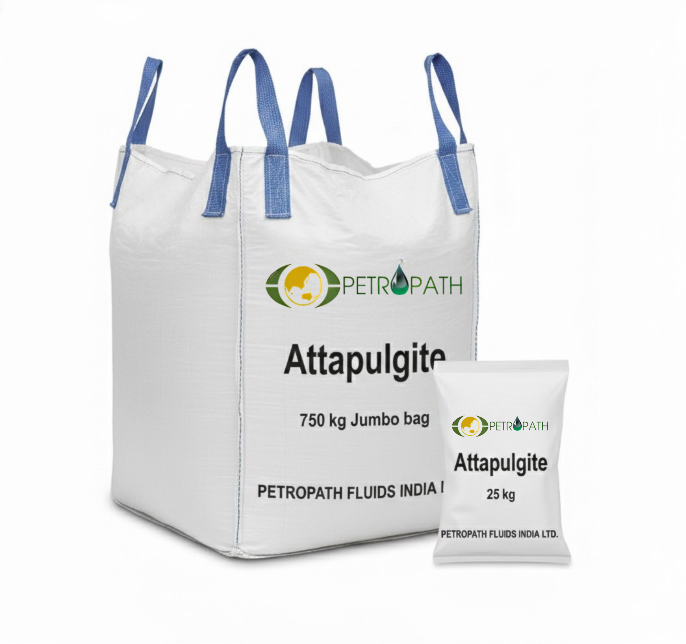
25 kg HDPE-lined bags
750 kg jumbo bags
Custom packaging available
Attapulgite (Sea Water Bentonite) for Offshore Drilling is non-flammable, non-toxic, and fully OSHA compliant.
🔐 Environmental, Health & Safety (EHS)
Attapulgite (Sea Water Bentonite) is:
Non-toxic
Non-flammable
Offshore discharge compliant
OSHA & NEERI aligned
Safe for handling and transport
Great article highlighting the critical role of specialized clays like Attapulgite for offshore drilling stability. The detailed explanation of its salt-tolerant properties and performance in high-salinity environments is very insightful.
This makes me wonder about the broader applications of such mineral-based gels. For instance, in a completely different field like medicine, calcium and magnesium are also combined into gel forms for therapeutic uses. I came across a formulation called Calcium Magnesium Gel (https://pillintrip.com/medicine/calcium-magnesium-gel) used to address certain deficiencies.
From an engineering perspective, are there any known cross-industry studies or research that explores the fundamental gel-forming mechanisms between industrial minerals like Attapulgite and biomedical gels? Understanding the similarities in their suspension and ionic stability could potentially lead to innovations in both fields. Has Petropath’s R&D team ever explored such comparative material science?