
API Filter Press: The Advanced Foundation of Accurate Drilling Fluid Testing
In the drilling industry, maintaining the quality and performance of drilling fluids is critical for operational efficiency, wellbore stability, and cost control. One of the most important instruments used for evaluating drilling fluid performance is the API Filter Press. Designed to measure fluid loss characteristics and evaluate mud cake formation, the API Filter Press has become an indispensable tool in drilling fluid laboratories, oil field operations, geological exploration projects, and research facilities worldwide.
As drilling environments become increasingly complex, operators require dependable testing equipment capable of delivering precise and repeatable results. The API Filter Press provides a standardized method for assessing filtration properties, enabling engineers and technicians to optimize drilling fluid formulations and improve overall drilling performance
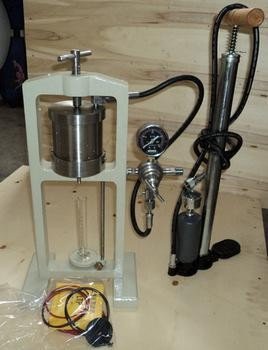
The API Filter Press is a specialized laboratory instrument used to determine the filtration behavior of drilling fluids under controlled pressure conditions. During drilling operations, fluid loss into permeable formations can significantly impact well performance, increase operational costs, and create stability challenges.
Using an API Filter Press, technicians can accurately measure the amount of filtrate that passes through a filter medium while simultaneously evaluating the quality and thickness of the resulting mud cake. These measurements help engineers formulate drilling fluids that minimize formation damage while maintaining effective well control.
For organizations involved in drilling fluid management, investing in a high-quality API Filter Press is essential for achieving reliable testing outcomes and maintaining compliance with industry standards
How an API Filter Press Works
The operating principle of an API Filter Press is straightforward yet highly effective. A drilling fluid sample is placed inside the testing chamber, and a controlled pressure is applied to force the fluid through a filter paper.
The filtrate collected during the test is measured over a specific period, while the mud cake formed on the filter medium is examined for thickness, consistency, and quality. These results provide valuable information regarding fluid-loss characteristics and filtration performance.
A professionally designed API Filter Press ensures that testing conditions remain consistent, allowing technicians to compare results accurately across multiple samples and formulations.
Key Features of Petropath API Filter Press
Petropath offers a premium-quality API Filter Press engineered to deliver exceptional performance in demanding laboratory and field environments. Designed according to industry standards, the equipment provides precise measurements while maintaining durability and ease of operation.
Effective Filtration Area
The unit features an effective filtration area of 45.6 cm², enabling accurate and efficient testing. This optimized filtration surface ensures reliable fluid-loss measurements and supports consistent mud cake development.
Standard Working Pressure
The API Filter Press operates at a working pressure of 0.69 MPa (100 PSI), creating the differential pressure required for accurate filtration testing. This standardized pressure helps ensure repeatable results and compliance with recognized testing procedures.
Adequate Sample Capacity
With a drilling fluid capacity of 350 ml per unit, the instrument accommodates sufficient sample volume for comprehensive analysis and dependable testing performance.
Durable Construction
Built using high-quality materials, the API Filter Press withstands challenging operating conditions encountered in laboratories, drilling sites, and research facilities. Its robust design contributes to long service life and reliable operation.
User-Friendly Operation
The equipment is designed with simplicity in mind, allowing technicians to conduct tests efficiently while minimizing maintenance requirements. Clear operating procedures enhance productivity and reduce testing errors.
Technical Specifications
The Petropath API Filter Press incorporates industry-recognized specifications to ensure dependable performance:
- Effective Filtration Area: 45.6 cm²
- Working Pressure: 0.69 MPa (100 PSI)
- Drilling Fluid Capacity: 350 ml per unit
- Equivalent Make: Fann, Offite, or equivalent standards
These specifications make the API Filter Press suitable for a wide range of drilling fluid testing applications.
Benefits of Using API Filter Press
Accurate Filtration Analysis
An API Filter Press delivers precise measurements of filtrate volume and mud cake properties. This information enables drilling professionals to make informed decisions regarding fluid optimization and operational performance.
Improved Operational Efficiency
Consistent testing helps identify drilling fluid issues before they affect field operations. As a result, companies can reduce downtime, improve drilling efficiency, and maintain wellbore integrity.
Enhanced Cost Management
By optimizing drilling fluid formulations through reliable testing, organizations can reduce waste, minimize fluid treatment expenses, and lower overall operational costs.
Reliable Performance
The durable construction and precision engineering of a quality API Filter Press ensure dependable results throughout extended periods of use.
Industry Compliance
Because the API Filter Press follows recognized testing standards, it supports quality assurance programs and helps organizations maintain compliance with industry requirements.
Applications of API Filter Press
Oil and Gas Drilling
Drilling engineers rely on API Filter Press testing to monitor fluid-loss characteristics and maintain effective drilling fluid performance during well construction activities.
Geological Exploration
Exploration teams use the equipment to analyze drilling fluid behavior under field conditions, helping improve operational planning and resource evaluation.
Laboratory Testing
Research laboratories utilize the API Filter Press for routine quality control, product validation, and performance testing of drilling fluid systems.
Research and Development
Scientists and engineers use the instrument to develop advanced drilling fluid formulations capable of meeting evolving industry requirements and challenging drilling environments.
Why Professionals Choose Petropath
Petropath has established itself as a trusted provider of drilling fluid testing equipment through a strong commitment to quality, innovation, and customer satisfaction.
Key advantages include:
- ISO 9001:2015 Certified Quality Management
- D&B Certified Business Standards
- More than 15 Years of Industry Experience
- Advanced Manufacturing and Testing Facilities
- Technical Collaboration with Global Industry Partners
- Reliable Product Performance and Customer Support
These strengths enable Petropath to deliver an API Filter Press that consistently meets the expectations of laboratories, drilling contractors, and research organizations worldwide.
Conclusion
The API Filter Press remains one of the most essential instruments in modern drilling fluid analysis. Its ability to provide accurate filter loss measurements and detailed mud cake evaluation makes it invaluable for maintaining drilling efficiency, reducing operational risks, and improving fluid performance.
Petropath’s API Filter Press combines precision engineering, durable construction, and user-friendly operation to deliver dependable testing results in laboratory and field environments. Whether used for routine quality control, geological exploration, or advanced research applications, the API Filter Press provides the accuracy and reliability needed to support successful drilling operations.