

Horizontal Directional Drilling Services: Building Below, Protecting Above
Modern infrastructure must expand without unnecessary damage to roads, landscapes, waterways, or communities. Horizontal Directional Drilling Services provide a controlled trenchless method for installing pipelines, conduits, cables, and underground utilities beneath obstacles without continuous open-cut excavation. It is especially useful where trenching would interrupt traffic, disturb sensitive ground, or require costly restoration.
A surface-launched drilling rig creates a planned underground bore path that can pass beneath highways, railway corridors, rivers, wetlands, developed areas, and other restricted locations. The Federal Highway Administration describes HDD as a multi-stage process involving a pilot bore, bore enlargement, and product pullback along a predetermined alignment.
What Are Horizontal Directional Drilling Services?
Horizontal Directional Drilling Services combine engineering design, subsurface investigation, electronic guidance, drilling-fluid management, bore enlargement, pipe preparation, and controlled pullback. The goal is a stable, accurate pathway that protects utilities and surface assets.
Planning begins with an assessment of soil conditions, crossing length, required depth, pipe diameter, bend radius, entry and exit points, nearby infrastructure, and environmental restrictions. Engineers use this information to develop a gradual, often inverted-arc bore profile and select suitable equipment.
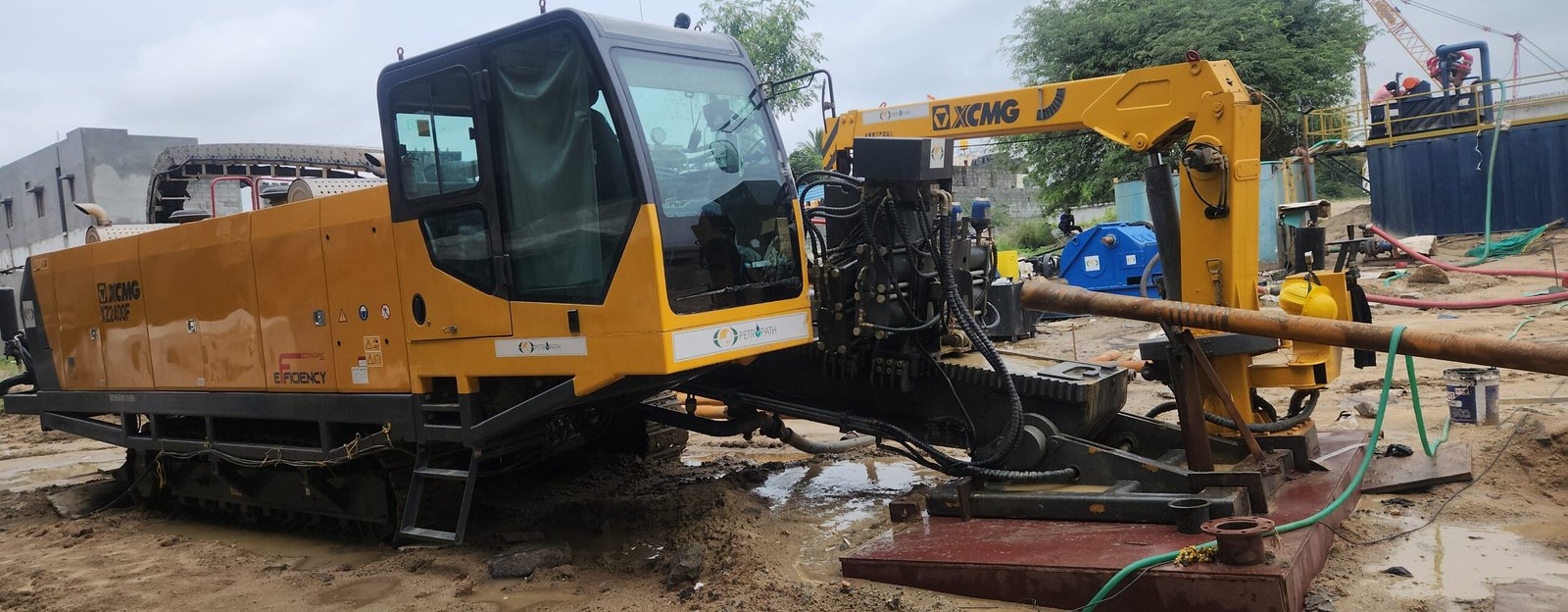
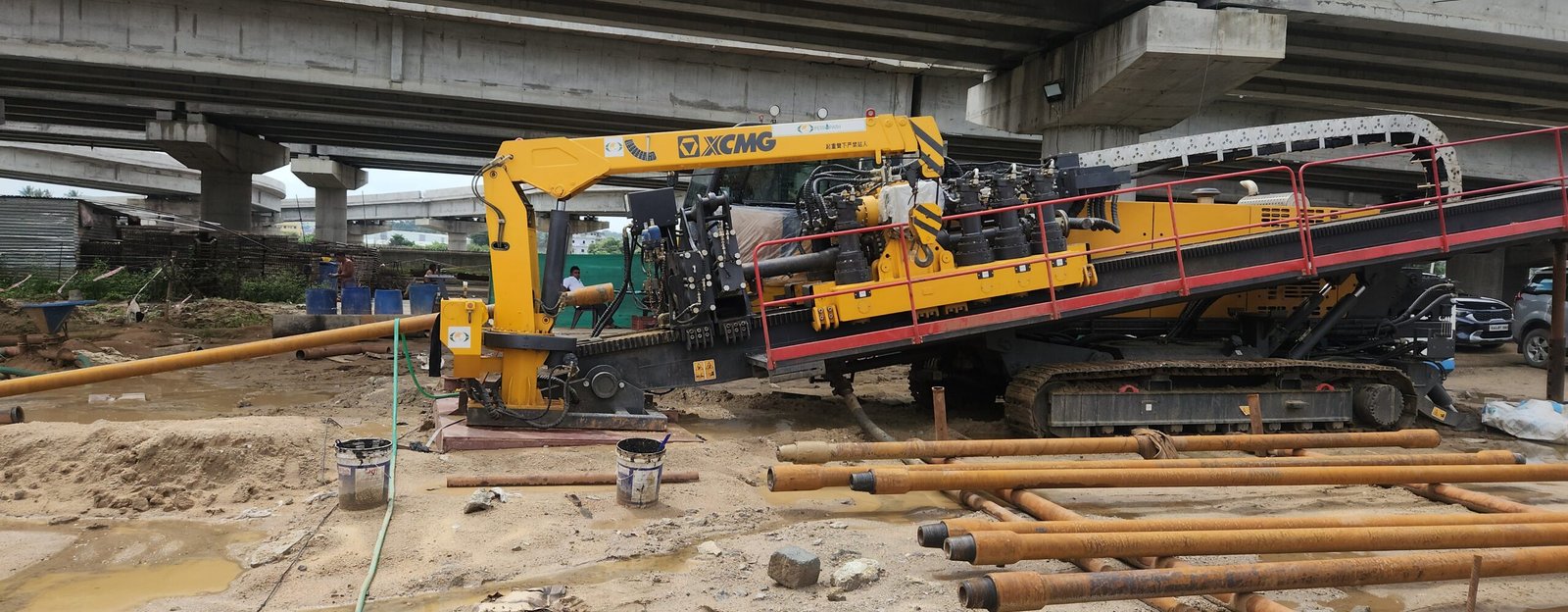
How the HDD Process Works
The first stage of Horizontal Directional Drilling Services is pilot-hole drilling. A steerable drill head follows the engineered route, while tracking equipment helps the crew monitor depth, direction, and position. The operator makes adjustments to maintain the approved alignment.
After the drill reaches the exit point, reaming tools enlarge the pilot bore to accommodate the pipeline or conduit. Reaming may require multiple passes, depending on ground conditions and pipe size.
Drilling fluid supports the bore, carries cuttings, cools tools, and reduces friction. Water and bentonite are commonly used, but the mixture should be designed for the specific geology and project requirements rather than treated as a fixed ratio.
During pullback, prepared pipe sections are joined into a continuous string, connected to the reaming assembly, and carefully pulled through the enlarged bore. Steel, polyethylene, and other approved materials may be selected based on pressure, product, soil, crossing conditions, and engineering standards.
Common HDD Applications
Horizontal Directional Drilling Services support a wide range of infrastructure projects, including:
- Oil, gas, water, and industrial pipeline crossings
- Electrical and telecommunications conduits
- Installations beneath highways and railway lines
- River, canal, lake, and wetland crossings
- Urban utility corridors with limited surface access
- Projects near environmentally sensitive areas
HDD has been used for crossings involving rivers, airports, ship channels, roads, and other major obstacles. It can suit compact utility projects and long-distance installations when geology and design conditions are appropriate.
Whether the project requires underground pipeline installation, fibre-optic conduit placement, or an HDD pipeline crossing, the method can provide a carefully controlled route beneath surface obstacles.
Environmental and Community Benefits
A major advantage of Horizontal Directional Drilling Services is reduced surface disturbance. Because continuous trench excavation is avoided, a project may require less pavement cutting, soil removal, vegetation clearance, traffic diversion, and post-construction restoration.
The Federal Highway Administration identifies trenchless methods as ways to install, replace, or repair underground facilities while minimizing open surface trenches.
This smaller footprint is valuable near waterways, wetlands, farms, businesses, and homes. However, HDD still requires a project-specific environmental and safety plan. Responsible execution includes drilling-fluid monitoring, pressure control, route inspection, containment equipment, and clear response procedures.
An inadvertent return may occur when drilling fluid follows natural fractures or weak soil and unexpectedly reaches the surface. EPA materials recognize this as an HDD risk that should be managed through prevention, monitoring, containment, and response planning.
Bentonite-based fluid is widely used, but any release must be handled according to the approved project plan and applicable environmental regulations.
Commercial Advantages of HDD
Well-planned Horizontal Directional Drilling Services can deliver important operational benefits. Reduced excavation may limit disruption, simplify crossings, and reduce surface reinstatement.
The key advantages include:
- Minimal surface interruption compared with continuous trenching
- Accurate installation along a designed underground alignment
- Efficient crossings beneath transport and water corridors
- Less restoration work in paved or landscaped areas
- Compatibility with multiple pipeline and utility applications
- Long-term performance when proper standards are followed
These trenchless drilling solutions can be particularly valuable in busy urban areas where closing roads, excavating large trenches, or relocating surface infrastructure would create major delays.
However, project cost and duration depend on geology, depth, length, pipe diameter, access, permits, and risk controls. Horizontal Directional Drilling Services should therefore be selected through a detailed feasibility study instead of being presented as automatically faster or cheaper for every site.
Quality, Safety, and Risk Management
Reliable Horizontal Directional Drilling Services require skilled people as well as advanced machinery. Project managers, drillers, welders, surveyors, fluid technicians, and safety teams must follow one coordinated plan.
Essential controls include:
- Existing utility detection
- Geotechnical investigation
- Bore-path engineering
- Suitable equipment selection
- Pipe stress calculations
- Drilling-fluid design
- Real-time bore tracking
- Pullback-force monitoring
- Emergency response planning
- Site-specific exclusion zones
Polyethylene systems can provide corrosion resistance and joined-pipe continuity in suitable utility applications, while coated steel may be selected for demanding pipeline conditions.
Quality records should document drilling parameters, fluid returns, alignment data, joint inspections, pullback forces, and final as-built details. These records improve accountability and support future maintenance.
Our Vision and Mission
Vision
Our vision is to establish a strong benchmark for precision, safety, quality, innovation, and environmental responsibility in trenchless construction.
Mission
Our mission is to deliver Horizontal Directional Drilling Services that create long-term value through sound engineering, disciplined execution, transparent communication, and responsible resource use.
By combining engineering knowledge with sustainable drilling technology, we support infrastructure growth while protecting surrounding communities, surface assets, and natural environments.
Build Underground Infrastructure with Confidence
Horizontal Directional Drilling Services provide a practical solution for installing underground networks beneath challenging obstacles. With experienced crews, suitable equipment, detailed engineering, and effective environmental controls, HDD can achieve precise installations while limiting surface disruption.
From underground pipeline installation and railway crossings to river crossings and urban utility expansion, Horizontal Directional Drilling Services help developers complete demanding projects safely and efficiently.
Partner with a qualified HDD team to plan your next trenchless infrastructure project with accuracy, reliability, safety, and sustainability at every stage.
We provide worldwide delivery, custom configurations, and technical support tailored to your operational needs.