

API Filter Press: Reliable Equipment for Accurate Drilling Fluid Testing
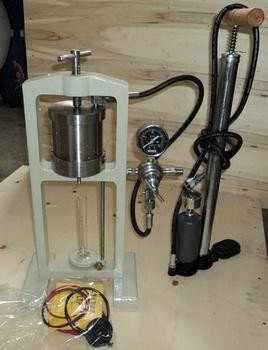
API Filter Press is essential equipment for evaluating drilling fluid filtration characteristics in oil and gas operations. Petropath Fluids India Limited supplies mud laboratory equipment for consistent testing in laboratories, field locations, geological exploration, and research facilities. By measuring filtrate loss and helping technicians assess the filter cake formed during testing, this instrument provides useful information for evaluating drilling fluid performance.
What Is an API Filter Press?
An API Filter Press is a laboratory instrument used to assess how drilling fluid behaves under controlled pressure. During a test, pressure forces liquid from a prepared mud sample through filter paper, allowing the technician to collect and measure the filtrate over a specified period. The test also produces a filter cake that can be examined for thickness and general condition.
These observations help drilling engineers understand fluid-loss behaviour and compare formulations. Results should be interpreted alongside the mud system, test procedure, and applicable API method rather than viewed in isolation. Consistent sample preparation and operating practices are important for meaningful comparisons between tests.
7 Important Features and Benefits
1. Reliable Filtration Measurements
The API Filter Press helps measure filtrate loss in a controlled test setup. This information supports the evaluation of drilling-fluid formulations and helps teams identify whether adjustments may be needed. Repeatable procedures, suitable filter paper, clean components, and accurate recording of test duration all contribute to useful results.
2. Defined Filtration Area
Petropath’s API Filter Press has a listed effective filtration area of 45.6 cm². A defined test area helps maintain consistency when comparing samples and documenting laboratory results. Technicians should confirm that the filter media and assembly are correctly installed before beginning each test.
3. Controlled Working Pressure
The API Filter Press has a listed working pressure of 0.69 MPa (100 PSI). Applying the specified pressure helps establish controlled test conditions for standard filtration evaluation. Operators must follow the equipment instructions and the applicable test procedure, and should never exceed the pressure rating of the unit or its components.
4. Practical Sample Capacity
The API Filter Press has a stated drilling-fluid capacity of 350 ml per unit. This capacity supports routine mud testing while providing a defined sample volume for repeatable procedures. Correct sample preparation and careful handling help reduce variation caused by inconsistent mixing, contamination, or sample loss.
5. Assessment of Filter-Cake Formation
Along with filtrate measurement, the API Filter Press allows laboratory personnel to inspect the filter cake formed during a test. Its appearance and thickness can provide additional context when reviewing fluid-loss behaviour. Assessment should follow the relevant procedure, because cake quality depends on the drilling fluid, test conditions, and formation characteristics being simulated.
6. Durable, User-Friendly Construction
The product page describes robust construction and straightforward operation for laboratory and field use. Equipment that is easy to set up, clean, and maintain can help laboratories follow consistent testing routines. Regular inspection of seals, fittings, pressure components, and other wear parts is important for safe and dependable operation.
7. Useful Across Multiple Work Environments
The API Filter Press is used in oilfield operations, geological exploration, mud laboratories, and research and development facilities. It can help teams compare drilling-fluid formulations, document filtration characteristics, and support quality-control workflows. It is one part of a broader testing process and should be used with other measurements when evaluating overall mud performance.
Technical Specifications
The product information supplied by Petropath lists the following parameters:
| Feature | Specification |
|---|---|
| Effective filtration area | 45.6 cm² |
| Working pressure | 0.69 MPa (100 PSI) |
| Drilling-fluid capacity | 350 ml per unit |
| Make | Fann / Offite / equivalent |
Confirm the current technical datasheet and product configuration with the supplier before purchase, especially where a project requires specific fittings, documentation, or a defined test standard. The listed values describe the product page information and should be checked against the exact unit being ordered.
How to Choose and Use the Equipment
Before purchasing an API Filter Press, consider the test method, expected sample volume, required operating pressure, laboratory workload, and availability of consumables and replacement parts. Verify that the unit is suitable for the intended procedure and that personnel have access to clear operating instructions. A supplier should be able to clarify the included components, technical documentation, and maintenance requirements.
For dependable results, prepare a representative sample and mix it consistently before testing. Inspect the equipment, assemble the filter cell correctly, and check that seals and fittings are in good condition. Apply only the specified operating pressure, follow the required test duration, and collect the filtrate using the prescribed method. Record test conditions and results, then clean and store the equipment according to its instructions. Consistent practices make results easier to compare over time.
Why Choose Petropath Fluids India Limited?
Petropath Fluids India Limited supplies API Filter Press and other drilling-fluid testing equipment for oilfield laboratories and related applications. The company’s product page highlights quality-focused manufacturing, industry experience, and technical support. When evaluating a supplier, customers should review the latest technical datasheet, relevant quality documentation, product compatibility, after-sales support, and delivery requirements. These checks help ensure that the selected equipment fits the laboratory’s actual needs.
FAQs – API Filter Press
The API Filter Press listed by Petropath has an effective filtration area of 45.6 cm², supporting controlled drilling-fluid filtration testing.
The listed working pressure is 0.69 MPa (100 PSI). Always follow the equipment’s operating instructions and applicable testing procedure.
The listed drilling-fluid capacity is 350 ml per unit, supporting routine filtration and mud-cake analysis.
The equipment is designed for straightforward operation. Users should follow the supplied instructions, inspect components before testing, and observe the appropriate safety precautions.
It is used in oilfields, drilling-fluid laboratories, geological exploration, and research and development facilities for filtration testing and mud-cake preparation.
Its key benefits include filtration measurement, support for mud-cake analysis, consistent test conditions, durable construction, and practical use in laboratory and field environments.
Conclusion
Xanthan Gum Powder is a versatile polymer that supports thickening, suspension, and stabilization in drilling fluids, HDD systems, food formulations, and selected pharmaceutical products. Choosing the right grade and verifying performance through appropriate testing helps achieve consistent results. Contact Petropath Fluids India Ltd. for product guidance, technical documentation, and bulk supply enquiries.
Contact our team today to request a quote, get technical guidance, or explore customization options for your HTHP testing needs.
We provide worldwide delivery, custom configurations, and technical support tailored to your operational needs.