

Introduction
In the evolving energy landscape, Coal Bed Methane (CBM) has emerged as a crucial unconventional resource. However, successful CBM exploration and production require accurate reservoir characterization and scientific evaluation. This is where Core Lab Services for CBM Reservoir Analysis play a transformative role.
At Petropath Fluids India Limited, advanced laboratory capabilities are dedicated to supporting CBM reservoir evaluation through precise data, scientific methodologies, and industry-compliant testing standards. With limited dedicated CBM laboratory infrastructure available, a specialized facility was established in Durgapur (West Bengal) to bridge the technical gap and support operators, researchers, and energy companies.
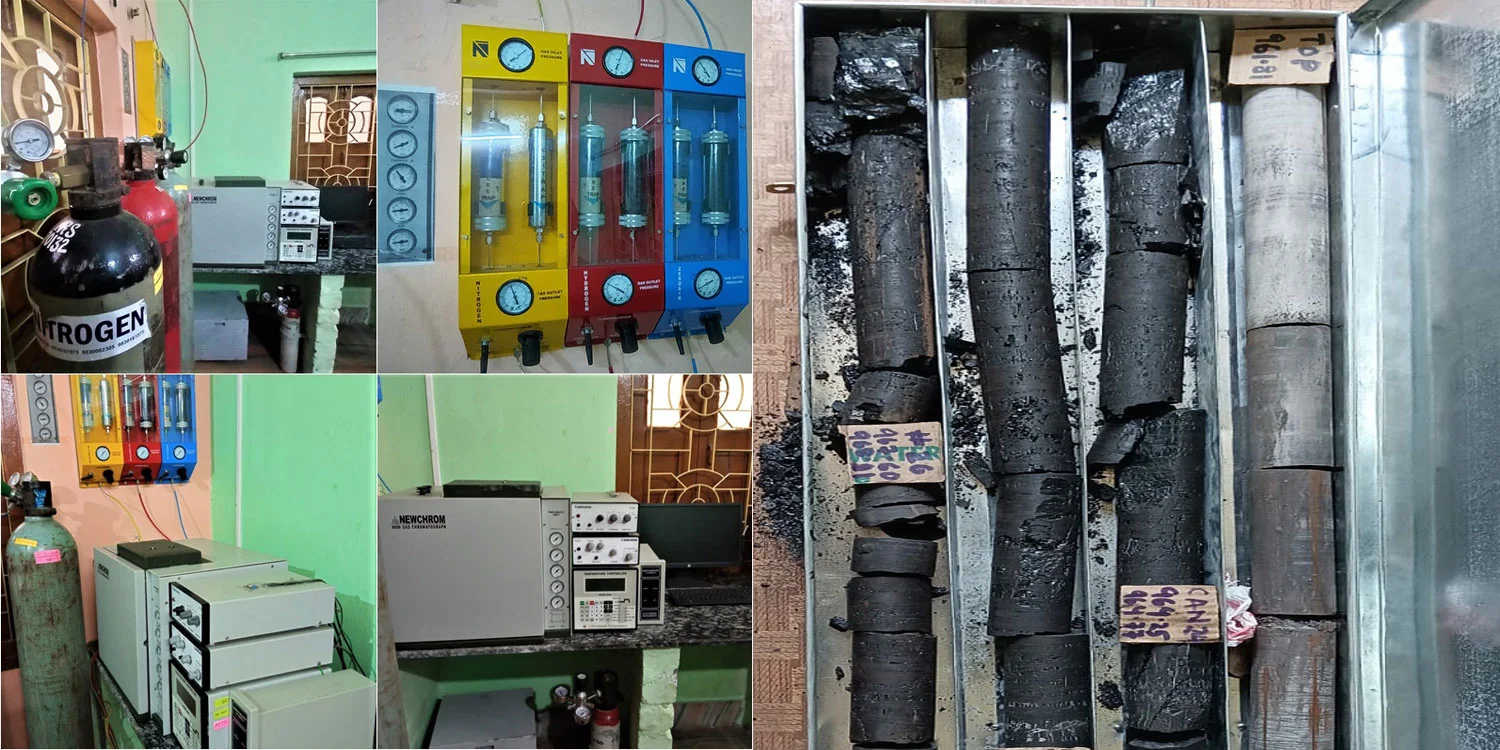
Why Core Lab Services for CBM Reservoir Analysis Matter
CBM reservoirs differ significantly from conventional hydrocarbon systems. Gas is stored in coal seams through adsorption rather than free flow. Therefore, understanding gas storage capacity, desorption characteristics, and coal properties becomes essential before commercial production.
Core Lab Services for CBM Reservoir Analysis provide:
Accurate measurement of in-situ gas content
Detailed coal quality assessment
Gas composition identification
Reservoir storage capacity evaluation
Data-driven reservoir modeling support
Without structured CBM core analysis services, investment decisions may carry higher geological and financial risks.
Comprehensive Core Lab Services for CBM Reservoir Analysis
A wide spectrum of coal bed methane laboratory testing solutions is offered to ensure complete reservoir characterization.
1. Field Desorption Studies
Field desorption is the first and most critical step in determining gas content. Fresh core samples are placed in canisters immediately after retrieval to measure desorbed gas volume over time.
Benefits:
Determines actual reservoir gas content
Evaluates commercial feasibility
Reduces uncertainty in production forecasting
This step forms the backbone of Core Lab Services for CBM Reservoir Analysis.
2. Gas Composition Analysis
Gas composition analysis determines the chemical makeup of coal seam gas, including methane, carbon dioxide, nitrogen, and trace gases.
Why it matters:
Identifies methane purity levels
Supports processing and marketing strategies
Assists in environmental compliance planning
Gas composition plays a direct role in reservoir valuation and long-term profitability.
3. Total Organic Carbon (TOC) Analysis
TOC testing evaluates the organic richness of coal samples, indicating hydrocarbon generation potential.
Key outcomes:
Determines coal maturity
Supports basin modeling
Helps prioritize drilling zones
High TOC values often correlate with improved CBM productivity.
4. Proximate and Ultimate Analysis
Proximate analysis measures:
Moisture content
Volatile matter
Ash content
Fixed carbon
Ultimate analysis determines elemental composition including carbon, hydrogen, nitrogen, sulfur, and oxygen.
These tests provide a complete understanding of coal quality, combustion behavior, and gas storage characteristics, reinforcing the importance of Core Lab Services for CBM Reservoir Analysis.
Advanced Coal Bed Analysis for Commercial Evaluation
Borehole site canister desorption is the primary tool used to quantify coal seam gas volume directly from freshly retrieved cores.
Advantages:
Measures lost, desorbed, and residual gas
Estimates total gas in place
Supports economic feasibility studies
Gas Content Analysis for CBM
Gas content analysis for CBM integrates desorbed gas, lost gas, and residual gas to determine total gas content.
Impact on operations:
Improves reservoir simulation accuracy
Enhances production planning
Reduces investment uncertainty
Reliable gas content analysis is central to Core Lab Services for CBM Reservoir Analysis.
Desorbed Gas Composition Study
This study evaluates fractionation behavior during the desorption process.
Insights gained:
In-situ gas chemistry
Production behavior forecasting
Long-term reservoir management strategy
Understanding how gas evolves during pressure depletion helps optimize CBM well performance.
Adsorption Isotherm Studies for Coal
Adsorption isotherm studies for coal measure gas storage capacity under reservoir temperature and pressure conditions.
Why adsorption testing is critical:
Determines maximum methane storage capacity
Predicts gas release during pressure drawdown
Supports enhanced recovery techniques
Without adsorption isotherm studies, estimating recoverable reserves becomes highly uncertain.
The Future of CBM Development Depends on Accurate Laboratory Evaluation
As global energy demand shifts toward cleaner alternatives, CBM remains a significant transitional resource. However, commercial success depends heavily on scientific reservoir understanding.
Core Lab Services for CBM Reservoir Analysis enable energy companies to:
Unlock hidden methane potential
Optimize well spacing and completion design
Forecast long-term production
Ensure environmental and regulatory compliance
From coal characterization to advanced gas behavior modeling, laboratory intelligence is the backbone of CBM reservoir success.
Conclusion
In today’s competitive energy environment, informed decisions define profitability. Core Lab Services for CBM Reservoir Analysis provide the scientific foundation required to evaluate coal bed methane reservoirs accurately and efficiently.
Through comprehensive coal bed methane laboratory testing, including gas content analysis for CBM, adsorption isotherm studies for coal, and detailed core characterization, operators can reduce risk, enhance recovery, and maximize investment returns.
For companies seeking reliable, data-driven CBM evaluation, advanced core lab services are not just an option—they are a necessity for sustainable and profitable reservoir development.
Email: info@ppdrillingfluids.in