
Cellophane Flakes: A Smarter Lost Circulation Solution for Better Wellbore Control
Cellophane Flakes are a flexible lost circulation material used to help reduce drilling-fluid losses when a well encounters porous formations, small fractures or seepage zones. During drilling, fluid can escape from the wellbore into the surrounding formation instead of returning fully to the surface. Even partial losses can disrupt circulation, increase mud consumption, affect hole cleaning and contribute to non-productive time. Selecting an appropriate lost circulation material (LCM) is therefore an important part of maintaining efficient drilling operations.
For drilling teams, the challenge is to choose a material that can help bridge openings without creating unnecessary changes to the drilling-fluid system. Cellophane Flakes offer a physical plugging approach based on the shape and flexibility of regenerated cellulose flakes. Petropath Fluids India Ltd. supplies this product for use in drilling-fluid applications where fluid-loss control and wellbore support are required.
Understanding Lost Circulation in Drilling
Lost circulation occurs when drilling fluid flows into the formation rather than returning through the annulus to the surface. The severity can range from minor seepage to partial or severe losses. Formation characteristics are a major factor. Naturally fractured formations, porous intervals, induced fractures and weak zones can all provide pathways through which mud escapes.
The effects are not limited to the loss of fluid volume. Reduced returns can make it harder to maintain the planned circulation programme and may affect cuttings transport. Additional fluid and treatment materials may be needed, increasing operating costs. In some situations, unmanaged losses can complicate wellbore stability and subsequent drilling or completion activities.
A suitable lost circulation material is selected according to the type and size of the loss pathway, the drilling-fluid system and the operating conditions. No single LCM is the right choice for every loss event. Particle characteristics, compatibility and the treatment objective should be assessed by the drilling-fluid team before application.
What Are Cellophane Flakes?
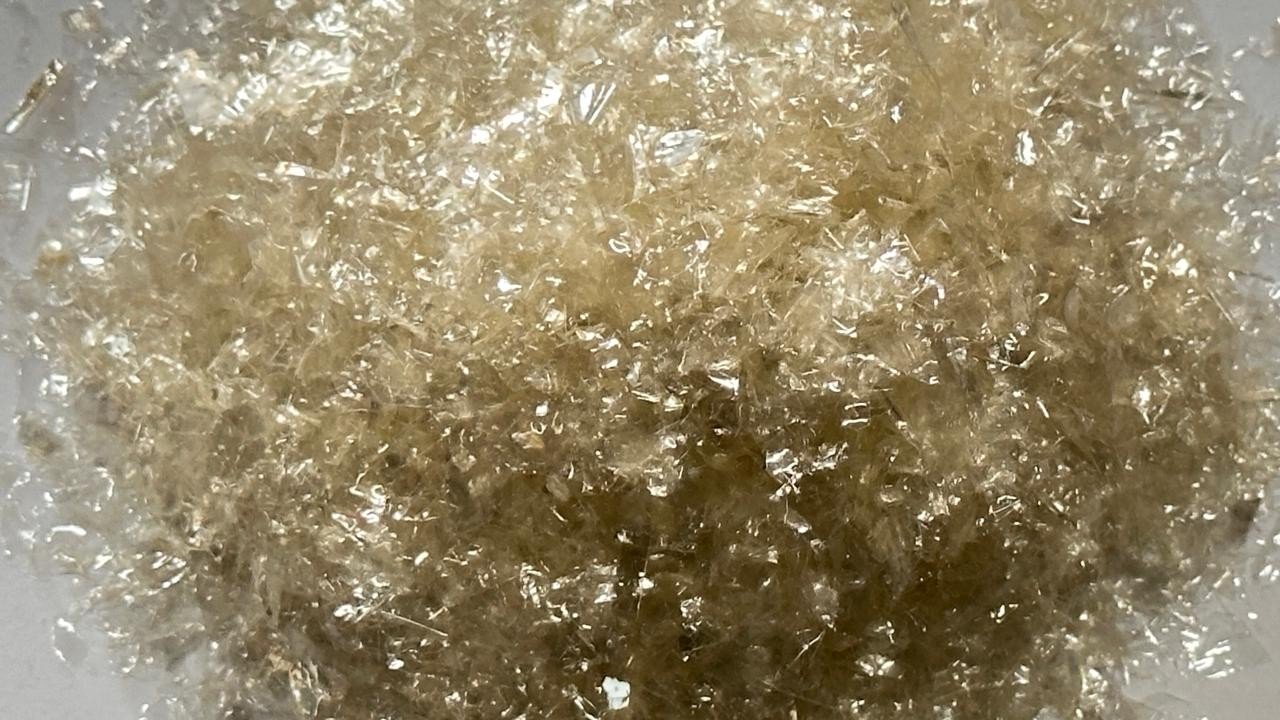
Cellophane Flakes are thin, lightweight and flexible flakes made from regenerated cellulose. Their physical form allows them to move with the drilling fluid and contribute to a bridging structure when they encounter openings in the formation. By interlocking across pores or fractures, Cellophane Flakes can help form a physical barrier that restricts further fluid movement into the formation.
Unlike materials that rely on chemical reaction or swelling, the product description identifies cellophane as chemically inert and non-swelling in drilling mud. This physical plugging mechanism makes Cellophane Flakes a useful option to consider in different mud formulations. Petropath’s product information describes its use in both water-based mud (WBM) and oil-based mud (OBM) systems, with particle-size distribution and dispersion characteristics considered important to consistent application.
The purpose is not to replace the complete mud programme. Instead, Cellophane Flakes can form one part of an LCM strategy designed around the formation, the observed loss rate and the required operational response.
How Cellophane Flakes Help Control Fluid Loss
Effective plugging depends on the relationship between Cellophane Flakes and the openings that need to be sealed. Flexible flakes can overlap and interlock, helping create a network across a pore or fracture entrance. As this structure develops, it can restrict the flow path and reduce the amount of drilling fluid entering the formation.
This approach is particularly relevant when the loss mechanism involves seepage or smaller openings that can be bridged by the selected particle distribution. The actual result depends on formation characteristics, particle sizing, concentration, fluid properties and placement. A treatment should therefore be designed using field observations and appropriate laboratory or operational guidance rather than relying on a universal dosage.
The flexibility of Cellophane Flakes is another useful characteristic. A flake-shaped particle behaves differently from a rigid granular material, and its ability to overlap may contribute to the formation of a sealing matrix. The product page also highlights dispersion characteristics as part of its quality focus. Good dispersion helps Cellophane Flakes distribute through the fluid rather than remaining concentrated in isolated pockets.
Choosing an LCM for Different Mud Systems
A drilling operation may use water-based or oil-based mud depending on well design, formation conditions, environmental considerations and operational requirements. An LCM must be evaluated in the context of the actual fluid system.
For water-based mud, the treatment team should consider the base fluid, salinity, existing additives and the expected behaviour of Cellophane Flakes during mixing and circulation. For oil-based mud, compatibility with the continuous phase and the overall formulation should be assessed. The product information identifies Cellophane Flakes for both WBM and OBM applications, but the suitability of a particular grade and treatment concentration should still be confirmed for the job.
Temperature and salinity can also influence the performance requirements of a drilling-fluid treatment. Petropath describes its flakes as remaining stable under elevated-temperature and high-salinity conditions. Operators should confirm the relevant grade and suitability against the actual well conditions and technical documentation before use.
Operational Situations Where Cellophane Flakes May Be Considered
The product page identifies several drilling applications where the material may be used as part of a fluid-loss management programme:
Seepage-loss control: helping restrict fluid movement into porous formations where the selected particle size can bridge the openings.
Microfracture sealing: contributing to a physical barrier across small fractures as part of a wellbore-strengthening or loss-control programme.
Partial lost circulation: supporting treatment strategies when the well experiences reduced returns rather than complete loss of circulation.
Casing and cementing support: assisting loss-control planning around operations where maintaining suitable wellbore conditions and zonal isolation is important.
These applications do not mean that the same treatment will work in every formation. Severe losses, large fractures or changing downhole conditions may require a different LCM blend or a specialised treatment. The drilling team should diagnose the loss mechanism and select materials accordingly.
Protecting Mud Properties During Treatment
When treating lost circulation, operators need to consider both the reduction in fluid loss and the effect of the treatment on the mud system. Some materials can change rheology, filtration behaviour or solids loading. These changes may influence pumping, hole cleaning and other fluid functions.
Petropath’s product description states that its flakes are intended to have minimal impact on viscosity and filtration properties. This characteristic can be useful when the aim is to address fluid loss while preserving the working properties of the mud. However, actual effects depend on the formulation, concentration and downhole conditions. Mud properties should be checked before and after treatment, and any adjustment should be based on measured results.
A disciplined treatment process includes recording the initial mud properties, confirming the product grade, following the recommended mixing procedure and monitoring circulation response. The treatment team should also document the amount used and the change in returns so that future decisions can be based on field evidence.
Product Quality, Handling and Supply
Consistency matters for an LCM because particle characteristics influence how it is transported and how it interacts with the loss zone. Petropath Fluids India Ltd. states that its quality checks include particle size, dispersion and fluid-loss performance. The company also lists dust-free formulations, different grades for site-specific requirements, custom packaging and bulk supply options.
Before ordering, buyers should communicate the mud type, expected operating conditions, nature of the loss and quantity requirement. This information helps the supplier and drilling-fluid team discuss the appropriate product grade and packaging. The product page does not specify a universal particle-size range or dosage, so these details should be confirmed directly for the intended application.
Good storage and handling practices should follow the product documentation and site procedures. Keep packaging protected from damage and contamination, and ensure materials are introduced using the approved mixing and treatment process. Site personnel should follow applicable safety requirements and consult the product documentation before use.
FAQs
These flakes are chemically inert, biodegradable, and highly flexible, which makes them more compatible with diverse mud systems compared to many conventional lost circulation materials.
Petropath identifies the product for use in both water-based mud and oil-based mud systems. The correct grade and treatment approach should be confirmed for the specific formulation and operating conditions.
The product page describes Cellophane Flakes as stable under elevated-temperature and high-salinity conditions. Operators should confirm suitability against the actual well conditions and relevant technical documentation.
The product information describes minimal impact on viscosity and filtration properties. The actual response can vary with concentration and mud formulation, so field checks before and after treatment remain important.
Petropath lists custom packaging and bulk supply options. Contact the company to confirm the available configuration, quantity and dispatch requirements for a particular project.
Conclusion
Lost circulation management requires an understanding of the formation, the drilling-fluid system and the type of loss taking place. A suitable LCM can help reduce fluid entering porous zones or fractures, support circulation and limit avoidable operational delays. Cellophane Flakes provide a flexible, physical plugging option made from regenerated cellulose, with applications described for water-based and oil-based mud systems.
For effective use, Cellophane Flakes should be selected as part of a broader treatment plan. Confirm compatibility, choose the appropriate grade, monitor mud properties and evaluate the response in the well. Petropath Fluids India Ltd. offers Cellophane Flakes with quality checks focused on particle size, dispersion and fluid-loss performance, alongside custom packaging and bulk supply options.
Contact our team today to request a quote, get technical guidance, or explore customization options for your HTHP testing needs.
We provide worldwide delivery, custom configurations, and technical support tailored to your operational needs.