

Introduction
Electrical Stability Meter technology plays a critical role in maintaining drilling fluid performance in modern oil and gas operations. This precision instrument is specifically designed to measure the emulsion stability of oil-based mud (OBM) and synthetic-based mud (SBM) systems, ensuring wellbore integrity, operational safety, and optimal drilling efficiency.
In high-pressure and high-temperature drilling environments, emulsion stability directly impacts lubrication, filtration control, and contamination resistance. A reliable Electrical Stability Meter provides mud engineers with accurate ES values, allowing proactive fluid management and preventing costly system failures.
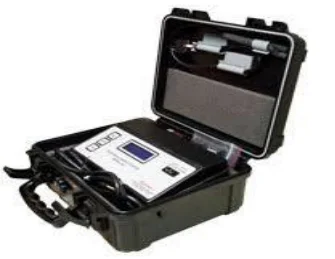
What is an Electrical Stability Meter?
An Electrical Stability Meter is a precision laboratory instrument used to measure the voltage required to break the emulsion in oil-based and synthetic drilling fluids. The measured voltage is known as the ES value.
This ES value indicates the strength of the emulsion system:
High ES value = Strong, stable emulsion
Low ES value = Possible contamination or insufficient emulsifier concentration
The electrical stability test oil based mud procedure is a standard API-recommended method widely used in drilling fluid laboratories. By applying increasing voltage across a mud sample, the instrument identifies the exact point at which the emulsion breaks, providing a measurable and repeatable stability indicator.
Because emulsion strength affects lubrication, filtration control, and wellbore protection, the Electrical Stability Meter is considered essential oil based mud testing equipment.
Why Electrical Stability Testing Matters in Drilling Operations
Drilling fluids must maintain consistent performance under extreme downhole temperatures and pressures. Even minor contamination can reduce emulsion strength and compromise well integrity.
Using an ES Meter for drilling fluids helps operators:
Monitor oil-based mud condition continuously
Detect water contamination early
Evaluate emulsifier effectiveness
Optimize chemical treatment programs
Maintain consistent mud rheology
Reduce risks in HPHT wells
Regular testing with an Electrical Stability Meter allows drilling teams to detect issues before they escalate into operational failures. This proactive approach significantly reduces downtime and improves drilling performance.
How the Electrical Stability Meter Works
The testing process is straightforward but highly precise:
A mud sample is placed in the test container.
Standard electrodes with fixed spacing are inserted.
Voltage is gradually increased.
The instrument records the voltage at which the emulsion breaks.
The fixed electrode spacing ensures accuracy and repeatability. Modern Electrical Stability Meter systems are designed to deliver consistent results in both laboratory and rig-site environments.
Because of its reliability and compliance with API standards, the Electrical Stability Meter remains a core component of professional drilling fluid laboratory instruments.
Technical Specifications
| Parameter | Specification |
|---|---|
| Power Supply | AC 220V ±10%, 50 Hz |
| Output Voltage | 0 – 2000 V |
| Output Frequency | 340 Hz |
| Electrode Spacing | 1.59 mm (0.061 inch) |
| Rated Power | 20 W |
Key Features of a High-Performance Electrical Stability Meter
A premium Electrical Stability Meter offers multiple advantages for drilling fluid quality control:
✔ Precision Measurement
Ensures consistent and repeatable ES values for accurate evaluation.
✔ Wide Voltage Range
0–2000 V output accommodates different mud systems.
✔ API-Compliant Design
Maintains standard electrode spacing for dependable testing.
✔ Rugged Construction
Built to withstand harsh oilfield and laboratory conditions.
✔ User-Friendly Operation
Simple interface allows quick testing with minimal training.
✔ Low Maintenance
Durable components reduce downtime and maintenance costs.
These features position the Electrical Stability Meter as one of the most reliable oil based mud testing equipment solutions available in the industry.
Applications Across the Oil & Gas Industry
The Electrical Stability Meter plays a vital role in multiple operational environments:
Rig site mud laboratories
Central drilling fluid laboratories
Oil-based and synthetic mud programs
Quality control departments
Research and development centers
Training institutions
As one of the most important drilling fluid laboratory instruments, it ensures consistent mud system performance throughout the drilling lifecycle.
Operational and Economic Benefits
Investing in a reliable Electrical Stability Meter provides measurable operational advantages:
Accurate emulsion stability measurement
Prevention of mud system breakdown
Improved drilling efficiency
Reduced chemical wastage
Lower non-productive time (NPT)
Enhanced wellbore stability
Early detection of contamination or emulsion weakness helps drilling teams adjust treatment programs before severe damage occurs. This makes the Electrical Stability Meter not just a testing tool, but a strategic asset for drilling cost control.
Why Choose Petropath Fluids India Ltd.?
Petropath Fluids India Ltd. is a trusted supplier of oilfield laboratory equipment and drilling fluid solutions. Our Electrical Stability Meter is manufactured under strict quality standards to ensure durability, precision, and long-term reliability.
We provide:
High-quality oilfield testing instruments
Complete drilling fluid laboratory solutions
Technical guidance and application support
Customized testing packages
Reliable after-sales service
Each Electrical Stability Meter undergoes quality inspection to meet industry performance expectations in demanding oilfield conditions.
Electrical Stability Meter: A Must-Have Tool for Mud Engineers
In oil and gas drilling, emulsion stability directly influences lubrication, filtration, and wellbore protection. A dependable Electrical Stability Meter provides essential data that supports:
Consistent drilling fluid performance
Improved safety standards
Better chemical management
Enhanced drilling efficiency
Whether deployed at a rig site or in a centralized laboratory, the Electrical Stability Meter plays a crucial role in maintaining drilling fluid integrity under challenging downhole environments.
Conclusion
The Electrical Stability Meter is an indispensable instrument for accurate emulsion stability testing in oil-based and synthetic drilling fluids. By delivering precise ES values, ensuring API compliance, and supporting proactive mud system management, this instrument enhances drilling reliability ad operational performance.
For high-precision testing and dependable oilfield performance, choose a professionally engineered Electrical Stability Meter designed to meet modern drilling demands.
Email: info@ppdrillingfluids.in