

Carboxymethyl Cellulose Low Viscosity: Smarter Filtration Control Without Unwanted Thickening
Carboxymethyl Cellulose Low Viscosity is a water-soluble polymer additive used in water-based drilling fluids to control filtration while limiting the increase in mud viscosity. In oil and gas operations, fluid loss into permeable formations can affect wellbore conditions and may contribute to formation damage. Petropath Fluids India Ltd. identifies its PP-CMC-LVG grade as a fluid-loss-control additive designed for drilling systems that require filtration management without excessive thickening. Selecting Carboxymethyl Cellulose Low Viscosity starts with understanding the mud system, water quality, formation characteristics, and the filtration target.
Why Filtration Control Needs a Low-Viscosity Approach
Drilling fluid is designed to circulate, transport cuttings, and help maintain suitable wellbore conditions. When filtrate moves from the mud into a permeable formation, it can alter the near-wellbore environment. Excessive fluid loss may contribute to filter-cake problems, differential sticking risk, or formation damage, depending on the geology and operating conditions.
A filtration-control additive helps limit the volume of liquid that passes into the formation under the specified test conditions. The advantage of a low-viscosity grade is that it is selected when filtration control is needed without a large increase in the fluid’s overall viscosity. Carboxymethyl Cellulose Low Viscosity is therefore relevant to mud programmes where maintaining flow behaviour is as important as reducing filtrate loss. Selecting Carboxymethyl Cellulose Low Viscosity for a specific well should be based on filtration targets and the mud’s required flow properties.
How CMC-LVG Works in a Water-Based Mud
Carboxymethyl cellulose is a cellulose-derived, water-soluble polymer. When properly dispersed and hydrated, it interacts with the liquid phase and fine solids in a drilling-fluid system. This can improve filtration control and support the formation of a thin, relatively low-permeability filter cake on the wellbore wall.
The result depends on polymer grade, concentration, mixing quality, water chemistry, solids content, and other additives in the formulation. The term “low viscosity” describes the grade’s intended rheological profile; it does not mean the additive has no effect on mud properties. Laboratory testing is necessary to determine how a particular treatment changes filtration and rheology in the actual fluid. In a properly designed programme, Carboxymethyl Cellulose Low Viscosity contributes to filtration management while the rest of the formulation provides the required carrying capacity.

Where the Additive Fits into Drilling Operations
Water-based drilling fluids
Water-based mud systems are a principal application for CMC-LVG. The additive is used where fluid-loss control is required while maintaining the planned mud rheology. Carboxymethyl Cellulose Low Viscosity can be evaluated in freshwater formulations and, subject to compatibility testing, in saltwater systems.
Formation protection programmes
When drilling through permeable or reservoir formations, operators may need to manage filtrate invasion carefully. A suitable polymer treatment can help reduce fluid loss under the selected test conditions. It should be considered as one part of the formation-protection programme, alongside fluid selection, solids control, and operational practices. For sensitive intervals, Carboxymethyl Cellulose Low Viscosity should be tested against the formation-protection criteria established for the well.
Directional and horizontal wells
Directional and horizontal drilling can involve extended exposure of the wellbore to drilling fluid. Consistent filtration properties are important to the overall mud programme. The suitability of Carboxymethyl Cellulose Low Viscosity should be established using representative samples and the project’s required filtration tests.
Polymer and clay-based mud systems
CMC-LVG may be used with bentonite-based and other polymer-containing water-based muds. The product page also identifies compatibility with additives such as PAC and starch. Compatibility should not be assumed for every formulation: evaluate the complete additive package and water chemistry before field treatment. Engineers should evaluate Carboxymethyl Cellulose Low Viscosity with the actual water source because dissolved salts and hardness can affect polymer performance.
What to Check Before Selecting a Grade
A product name alone is not enough to establish suitability. Mud engineers should consider the required filtration performance, acceptable viscosity range, salinity, hardness, temperature, solids loading, and the properties of the base fluid. Confirm the exact grade and its technical documentation with the supplier.
Petropath lists PP-CMC-LVG with the following typical product characteristics:
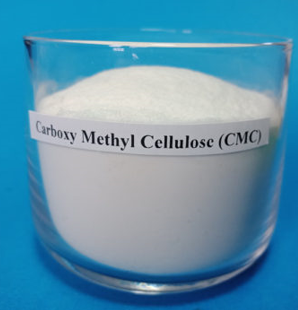
Appearance: off-white to cream powder
Chemical type: carboxymethyl cellulose
Solubility: fully water-soluble
pH of a 1% solution: 6.0–8.5
Moisture content: maximum 10%
Viscosity classification: low-viscosity grade
Primary application: drilling-fluid filtration control
The product information describes the degree of substitution as controlled but does not provide a numerical value. Request the current technical data sheet and batch certificate for the exact grade being supplied. Do not infer a viscosity value or API compliance level where it has not been stated in the current documentation.
Mixing and Field Evaluation
Good dispersion is important because poorly mixed polymer can form lumps and hydrate unevenly. Follow the supplier’s recommended addition sequence and mixing procedure. Add the powder gradually using suitable mixing equipment, allowing sufficient time for dispersion and hydration according to the product instructions. The correct treatment concentration should be established through laboratory tests rather than copied from another mud system.
Before and after treatment, record the fluid properties required by the drilling programme. These may include filtration results, viscosity, gel strengths, density, and other relevant measurements. Compare results under consistent test conditions so that changes can be attributed more reliably to the treatment. Carboxymethyl Cellulose Low Viscosity should be adjusted in controlled steps, with each change documented and evaluated. The final treatment plan for Carboxymethyl Cellulose Low Viscosity should document the grade, mixing sequence, test conditions, and measured response.
If filtration performance does not meet the target, investigate water quality, solids distribution, mixing, and compatibility before simply increasing the dosage. Excessive polymer addition may change rheology or create handling issues. Follow the mud engineer’s recommendations and verify the finished formulation before field use. During field trials, compare Carboxymethyl Cellulose Low Viscosity treatments at controlled concentrations rather than changing several additives at once.
Packaging, Storage, and Handling
Petropath lists packaging options including 25 kg multi-wall paper bags, HDPE-lined bags, and 1 MT jumbo bags. Confirm current availability, liner details, palletisation, and delivery requirements before ordering. Select packaging based on site consumption, storage capacity, and material-handling equipment.
Store the product in a dry area and keep bags sealed until use. Protect the powder from moisture and contamination. Minimise dust during handling and use the personal protective equipment specified in the latest safety data sheet. Follow site procedures for storage, housekeeping, and disposal of empty packaging.
Choosing a Supplier for Consistent Mud Performance
For a drilling-fluid additive, consistency between batches and access to technical documentation matter as much as the product description. Ask the supplier for the current specification, certificate of analysis, safety data sheet, packaging details, and guidance on compatibility with the planned mud system. Where conditions are demanding, conduct a laboratory screening or controlled field trial before adopting the material at scale.
Petropath Fluids India Ltd. manufactures PP-CMC-LVG for drilling-fluid filtration control. Customers evaluating Carboxymethyl Cellulose Low Viscosity should share their fluid type, water source, filtration target, and operating conditions with the technical team. This helps determine whether the grade is appropriate and what testing should be completed before use. A supplier discussion about Carboxymethyl Cellulose Low Viscosity should include the expected salinity, temperature, solids loading, and filtration test method. With those details available, the suitability of Carboxymethyl Cellulose Low Viscosity can be assessed more reliably before full-scale use.
Conclusion
Effective filtration management requires a balance between reducing filtrate loss and preserving the rheological properties needed for circulation and cuttings transport. Carboxymethyl Cellulose Low Viscosity is designed for water-based drilling-fluid systems where a low-viscosity CMC grade is preferred for filtration control. Confirm the product specification, test it in the intended formulation, and monitor the mud throughout the operation. A documented selection and treatment process helps drilling teams make decisions based on measured performance rather than assumptions. Document Carboxymethyl Cellulose Low Viscosity performance. Review Carboxymethyl Cellulose Low Viscosity compatibility.
Contact our team today to request a quote, get technical guidance, or explore customization options for your HTHP testing needs.
We provide worldwide delivery, custom configurations, and technical support tailored to your operational needs.