

Laboratory Conductivity Meter: Features & Benefits
A laboratory conductivity meter needs stable, repeatable readings. This article covers what to look for in a laboratory conductivity meter, from sensor quality to calibration and data logging, and how our digital conductivity meter fits laboratory use.
Introduction
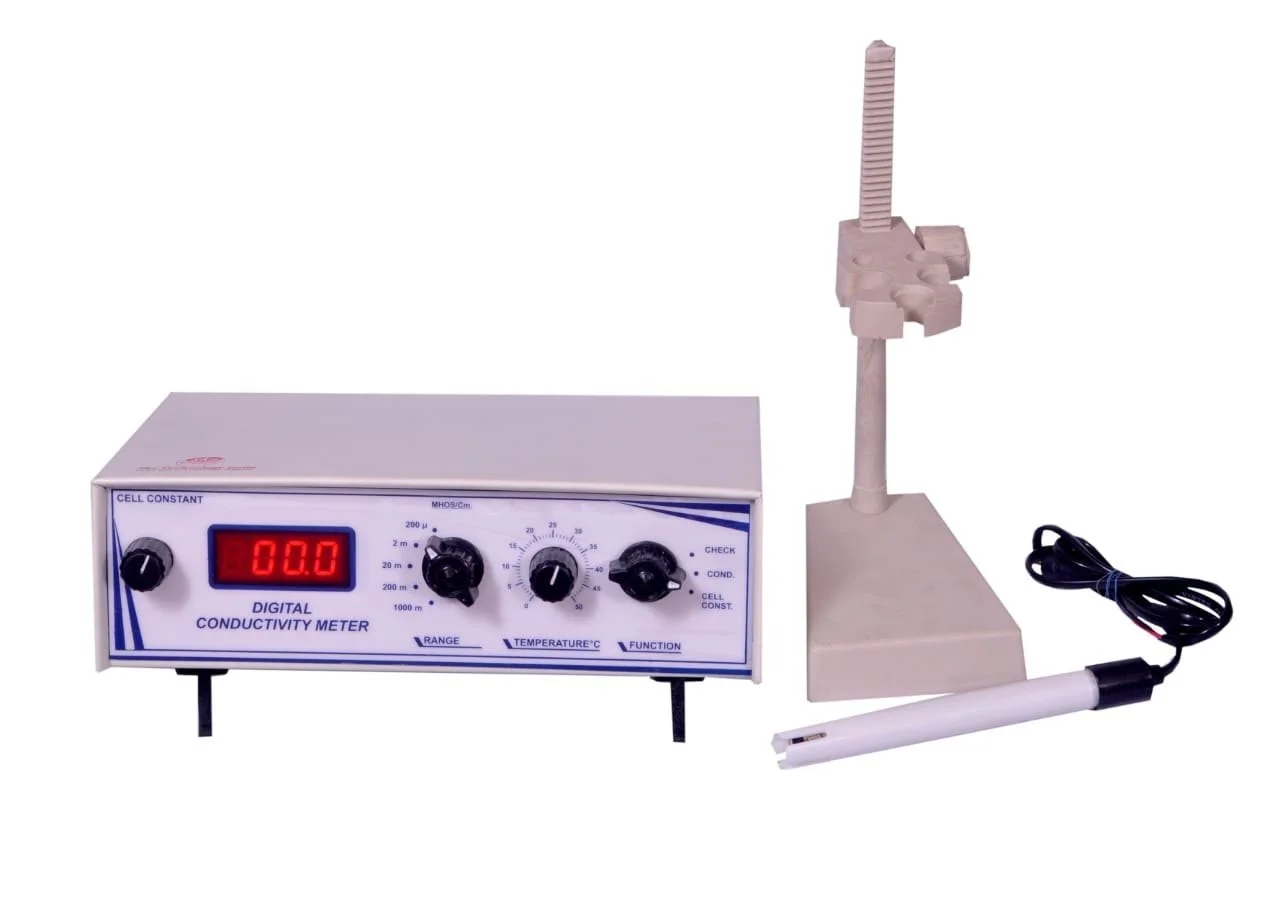
What Is a Digital Conductivity Meter?
Key Features of a Laboratory Conductivity Meter
1. High-Precision Sensors
The meter is equipped with advanced sensors that deliver highly accurate conductivity readings with minimal deviation. This ensures confidence in every measurement, even in critical industrial processes.
2. User-Friendly Interface
A large digital display and intuitive controls allow effortless operation. Whether used by laboratory professionals or field technicians, the device ensures smooth usability with minimal training.
3. Wide Measurement Range
With a conductivity range of 0 to 200,000 µS/cm, this industrial conductivity meter is suitable for testing pure water, wastewater, chemical solutions, and high-conductivity industrial fluids.
4. Rugged and Durable Design
Built using premium materials, the instrument withstands harsh industrial conditions, ensuring long service life and reduced maintenance costs.
5. Calibration and Data Logging
Simplified calibration ensures consistent accuracy, while integrated data logging supports trend analysis and quality documentation.
Technical Specifications at a Glance
Measurement Range: 0 to 200,000 µS/cm
Accuracy: ±1% of reading
Resolution: 1 µS/cm
Power Supply: Rechargeable battery or AC adapter
Dimensions: 190 × 65 × 35 mm
Weight: 220 g
These specifications make it an ideal laboratory conductivity meter as well as a portable field solution.
Key Benefits of Using a Digital Conductivity Meter
Accurate and Reliable Readings
Advanced sensing technology ensures precise conductivity measurement, helping industries maintain quality and safety standards.
Time-Saving Efficiency
Fast response times and a wide measurement range reduce testing time in laboratories and industrial settings.
Long-Term Reliability
The robust design minimizes downtime, ensuring continuous operation in demanding environments.
Smart Data Management
Data logging enables historical trend analysis, supporting process optimization and compliance reporting.
Versatile Applications
From research laboratories to water treatment plants, the device adapts seamlessly to various use cases.
Applications Across Industries
Water Treatment Plants
The water conductivity testing equipment helps monitor water purity and ensure compliance with regulatory standards.
Environmental Monitoring
Used to evaluate water and soil conductivity, supporting environmental assessments and sustainability initiatives.
Laboratories and Quality Control
Provides precise conductivity data for research, formulation testing, and quality assurance.
Industrial Processes
Supports real-time monitoring of chemical and fluid processes, reducing waste and improving efficiency.
Research and Development
Essential for experimental analysis, product development, and validation studies.
FAQs
Why Choose Petropath Fluids India Limited?
- Advanced Technology: Precision-engineered instruments for reliable conductivity measurement
- Industry Expertise: Over 15 years of experience in oilfield and laboratory equipment
- Exceptional Support: Comprehensive customer assistance from installation to maintenance
- Quality Assurance: Manufactured to meet stringent industrial standards
Conclusion
A reliable laboratory conductivity meter saves time and avoids retesting. Contact our team to find the right laboratory conductivity meter for your lab.
Quick tips: choosing a laboratory conductivity meter
- Check that your laboratory conductivity meter covers the conductivity range of your samples.
- Calibrate your laboratory conductivity meter regularly with standard solutions to keep readings reliable.
- Rinse the probe of your laboratory conductivity meter between samples to avoid carry-over.
- Store the probe of your laboratory conductivity meter as the manufacturer recommends to extend its life.
- Compare the accuracy and resolution of each laboratory conductivity meter before you buy.
- Look for temperature compensation in a laboratory conductivity meter if you test at different temperatures.
- Choose a laboratory conductivity meter with data logging if you need to keep test records.
- Ask for a calibration certificate when you buy a laboratory conductivity meter.