

Lubricity Meter: 7 Powerful Benefits for Accurate Drilling Fluid Testing
Efficient drilling depends on maintaining the correct properties of the drilling fluid. One important property is lubricity, which determines how effectively the fluid reduces friction between the drill string, casing, and wellbore. Excessive friction can increase torque and drag, accelerate equipment wear, reduce the rate of penetration, and raise operational costs.
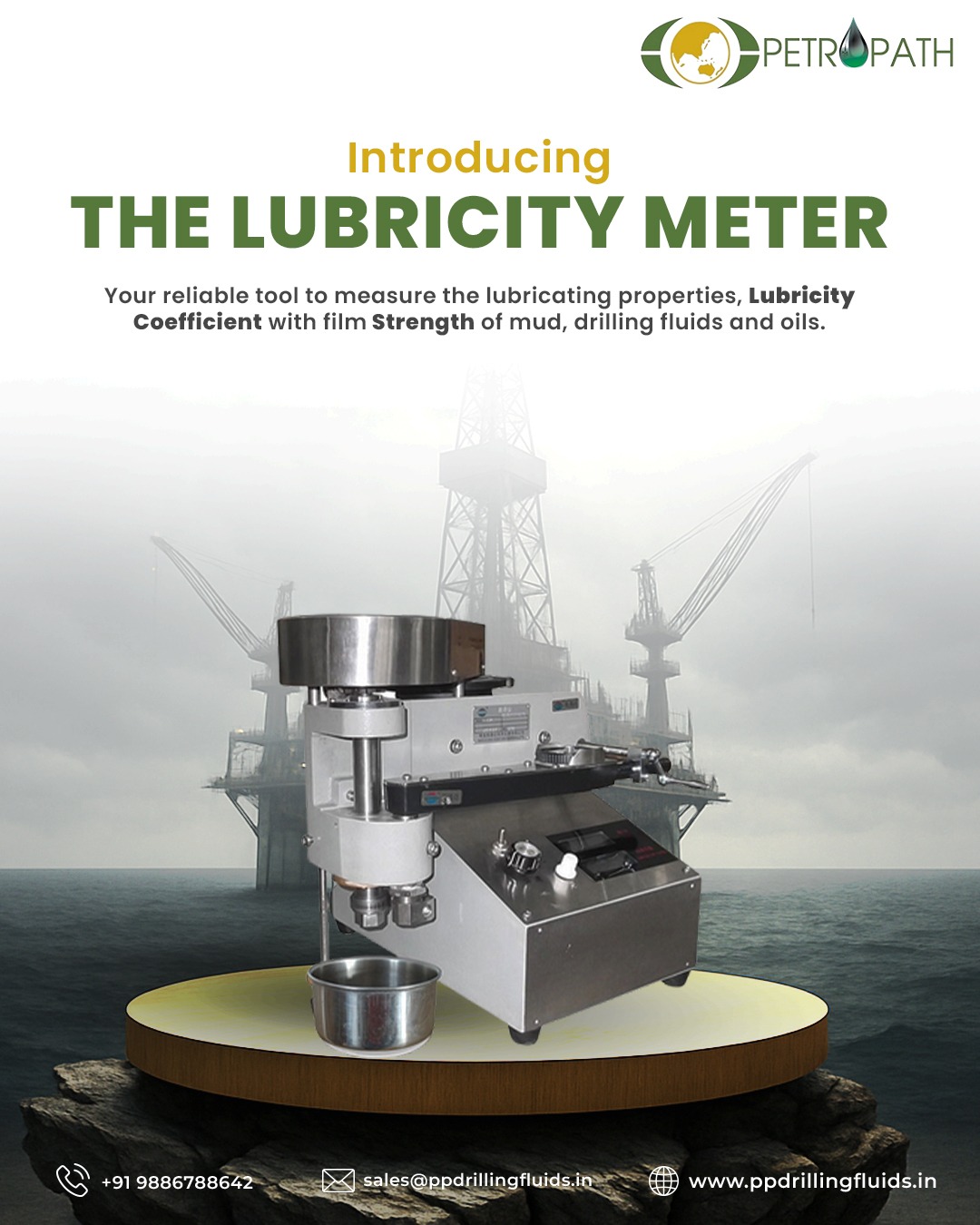
A Lubricity Meter provides accurate information about the lubricating performance of water-based and oil-based drilling fluids. Petropath’s advanced testing instrument measures the mud lubricity coefficient, film strength, and frictional behaviour under controlled conditions.
By using reliable test data, mud engineers can optimize drilling fluid formulations, evaluate lubricating additives, and prevent problems associated with poor lubrication.
What Is a Lubricity Meter?
A Lubricity Meter is a laboratory testing instrument used to evaluate the friction-reducing ability of drilling fluids. It creates controlled contact between metal surfaces to simulate some of the friction conditions encountered during drilling.
The instrument applies a specified force between the test surfaces while measuring the torque required to maintain movement. The recorded value helps determine the coefficient of friction and the overall lubricating performance of the mud.
This process allows drilling professionals to compare fluid formulations, identify performance changes, and determine whether additional lubricant is required.
What Does the Instrument Measure?
The Lubricity Meter provides several important measurements for drilling fluid evaluation.
Lubricity coefficient
The lubricity coefficient is a numerical indication of friction between two surfaces in the presence of drilling fluid. A lower coefficient generally indicates better lubrication and reduced resistance to movement.
Film strength
Drilling fluid film strength describes the ability of the lubricant to maintain a protective layer between metal surfaces under pressure. Stronger films help reduce direct metal-to-metal contact, equipment damage, and premature wear.
Torque response
Torque readings show how much rotational force is needed during the test. These results can help engineers understand how a fluid may influence torque and drag during drilling.
Why Is Drilling Fluid Lubricity Important?
During drilling, the drill string frequently contacts the casing, filter cake, or exposed formation. This contact creates friction, particularly in deviated, horizontal, deep, and extended-reach wells.
Insufficient lubrication may contribute to:
- Excessive torque and drag
- Reduced drilling speed
- Premature wear of drilling equipment
- Higher energy requirements
- Difficulty running casing and completion equipment
- Increased possibility of differential sticking
- More frequent maintenance and downtime
Regular testing with a Lubricity Meter enables engineers to detect poor mud lubricity before it develops into a more expensive operational problem.
Seven Powerful Benefits of Lubricity Testing
1. Accurate evaluation of mud lubricity
The instrument provides measurable results instead of relying on visual observations or assumptions. Accurate drilling fluid lubricity testing helps engineers select formulations that meet operational requirements.
2. Better control of torque and drag
Excessive torque and drag can restrict drilling progress and place additional stress on surface and downhole equipment. A Lubricity Meter helps identify whether the fluid provides sufficient friction reduction.
3. Improved drilling tool protection
Better lubrication reduces damaging contact between metal surfaces. This can help protect drill pipes, collars, casing, bearings, and other components against excessive mechanical wear.
4. Reliable additive evaluation
Drilling fluid lubricants vary in chemistry, concentration, and performance. Testing allows engineers to compare different additives and determine the most effective treatment level for a particular mud system.
5. Stronger protective film
Measuring drilling fluid film strength helps confirm whether the fluid can maintain an effective barrier under load. A durable lubricating film supports smoother movement and reduces surface damage.
6. Optimized drilling fluid costs
Adding too little lubricant can compromise performance, while excessive treatment unnecessarily increases fluid costs. A Lubricity Meter supports dosage optimization by showing how the mud responds to different concentrations.
7. More efficient drilling operations
Improved lubrication supports smoother drill-string rotation, reduced mechanical resistance, and better equipment reliability. These benefits can contribute to higher drilling efficiency and lower non-productive time.
Applications in Drilling Operations
Petropath’s Lubricity Meter can be used in laboratories, mud plants, field testing facilities, research centres, and drilling locations.
Typical applications include:
- Testing water-based mud and oil-based mud
- Measuring the mud lubricity coefficient
- Monitoring changes in fluid performance
- Evaluating lubricants and drilling additives
- Comparing treated and untreated mud samples
- Checking drilling fluid film strength
- Supporting quality-control procedures
- Optimizing fluids for deviated and horizontal wells
The instrument is useful for mud engineers, drilling contractors, chemical manufacturers, testing laboratories, oilfield service companies, and research teams.
How Is a Lubricity Test Performed?
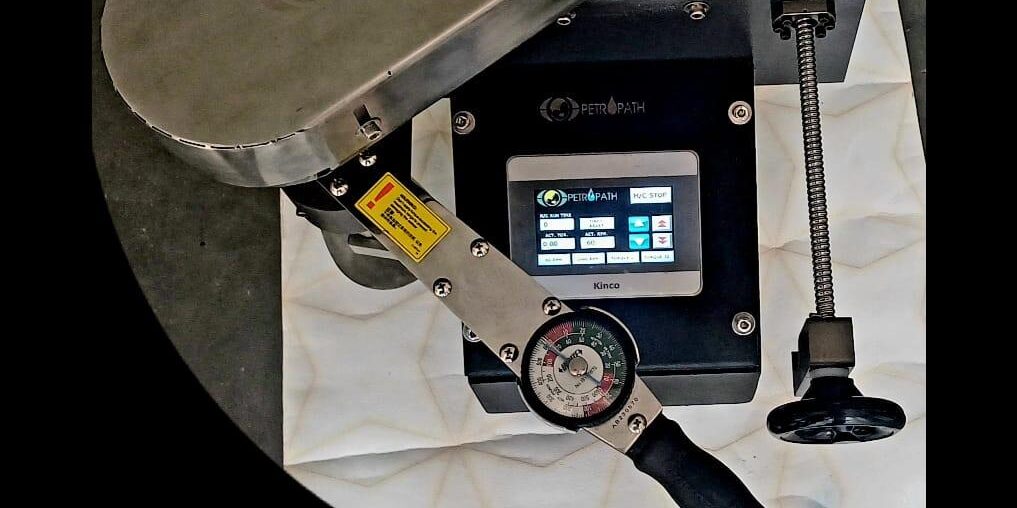
Before testing, the instrument should be cleaned, inspected, and calibrated according to the applicable operating procedure. The prepared drilling fluid sample is placed in the test container, and the metal test surfaces are brought into controlled contact.
A specified load is applied, and the instrument records the torque generated during movement. The operator then uses the reading and relevant calculation factor to determine the lubricity coefficient.
To obtain consistent results, engineers should maintain the required load, rotational speed, test duration, sample temperature, and equipment condition. Test surfaces should also be cleaned properly between samples to prevent contamination.
Why Choose the Petropath Lubricitimeter?
Petropath provides dependable drilling fluid testing equipment developed for practical laboratory and field requirements. The Petropath Lubricity Meter combines precision, durable construction, straightforward operation, and convenient maintenance.
Key advantages include:
- Accurate torque and friction measurements
- Reliable evaluation of film strength
- Robust design for demanding environments
- Simple calibration and operation
- Suitability for WBM and OBM testing
- Consistent results for quality control
- Practical support for fluid optimization
These capabilities help drilling teams make informed decisions about lubricant selection, concentration, and overall mud performance.
Get in Touch:
Have questions or need more details about our solutions? Our team is here to help you with the right guidance and support. Reach out today and let us assist you with your requirements.
We offer global shipping, technical support, and customization options. Choose Petropath – where innovation meets precision.