

Introduction
In the oil and gas industry, efficient fluid circulation determines drilling performance, safety, and cost control. At the center of this circulation system is the mud pump in oil & gas drilling—a high-pressure reciprocating pump that ensures continuous movement of drilling fluids throughout the wellbore.
Often called the “heart of the drilling rig,” the mud pump maintains wellbore stability, cools and lubricates drill bits, transports cuttings to the surface, and controls formation pressure. Without a reliable drilling pump, modern onshore and offshore operations would not be possible.
This comprehensive guide explains how mud pumps work, their technical specifications, benefits, and why API-compliant systems are essential for safe drilling operations.
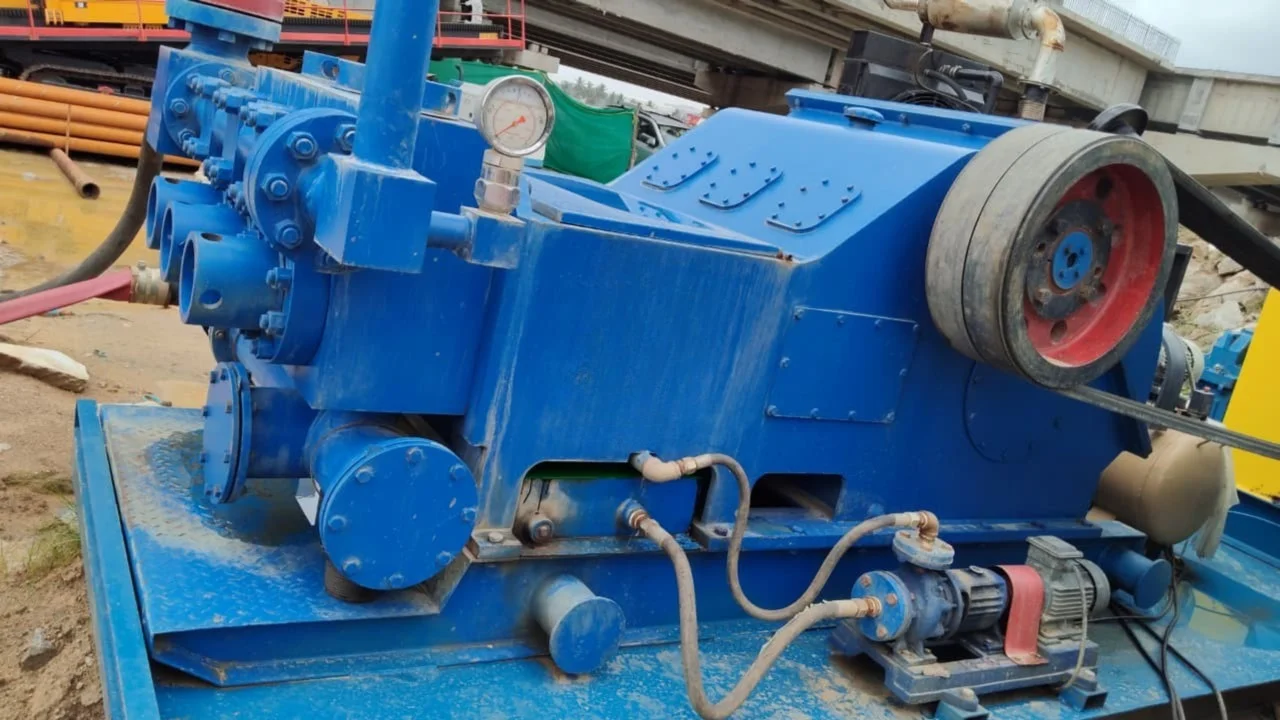
What is a Mud Pump in Oil & Gas Drilling?
A mud pump in oil & gas drilling is a heavy-duty reciprocating piston or plunger pump designed to circulate drilling fluid (mud) under high pressure. The pump draws mud from the mud pits and forces it down the drill string, through the drill bit, and back up the annulus carrying rock cuttings to the surface.
Modern drilling operations primarily use triplex reciprocating pumps, which feature three cylinders to ensure smoother and more efficient fluid flow compared to duplex systems.
These pumps are manufactured according to international oilfield standards such as American Petroleum Institute API 7K, ensuring reliability, safety, and compatibility with global drilling operations.
How a Mud Pump Works
The working principle of a mud pump in oil & gas drilling is based on reciprocating motion:
Suction Stroke – The piston retracts, creating a vacuum that draws drilling fluid into the liner chamber.
Discharge Stroke – The piston moves forward, forcing fluid through discharge valves into the high-pressure manifold.
Continuous Circulation – The process repeats at high speed, maintaining steady flow to the wellbore.
Triplex pumps reduce pulsation and deliver consistent pressure, which is critical for deep well drilling and high-pressure formations.
Key Technical Specifications
High-performance drilling pumps are engineered for extreme environments. Typical technical specifications include:
Type: Triplex reciprocating piston/plunger pump
Power Range: 500 – 2200 HP
Maximum Working Pressure: Up to 7,500 psi
Liner Size Range: 4″ – 7½″
Stroke Length: 8″ – 12″
Flow Rate: 200 – 1000 GPM
Pump Speed: 120 – 150 RPM
Valve Type: Replaceable, API 7K standard
Lubrication System: Splash or forced lubrication
Cooling System: Water cooling for liners and pistons
Compliance: API 7K / ISO certified
These specifications ensure that the mud pump in oil & gas drilling applications performs efficiently even in high-temperature, high-pressure (HTHP) wells.
Why Mud Pumps Are Critical in Drilling Operations
1. Wellbore Stability
Drilling fluids create hydrostatic pressure that prevents formation collapse. A reliable mud pump ensures constant pressure control.
2. Bit Cooling and Lubrication
Continuous fluid flow cools the drill bit, reduces friction, and extends tool life.
3. Cuttings Transport
High-pressure circulation lifts drilled rock fragments to the surface for removal.
4. Blowout Prevention
Maintaining balanced formation pressure reduces the risk of kicks and blowouts.
Without an efficient mud pump in oil & gas drilling, operational safety and drilling performance would be severely compromised.
Advantages of Triplex Mud Pumps
Most modern rigs prefer triplex systems because they offer:
Smoother fluid delivery
Higher pressure capability
Reduced vibration
Lower maintenance requirements
Improved energy efficiency
These advantages make triplex pumps the industry standard for both onshore and offshore drilling rigs.
Applications of Mud Pump in Oil & Gas Drilling
The mud pump in oil & gas drilling is widely used across multiple sectors:
Onshore Drilling Rigs
Ensures consistent fluid circulation during land-based drilling operations.
Offshore Platforms
Engineered to withstand corrosive marine environments and extreme pressure conditions.
Workover Rigs
Supports well servicing, repair, and stimulation operations.
Geothermal & CBM Projects
Provides reliable circulation in unconventional drilling applications.
Directional & Horizontal Drilling
Maintains drilling fluid integrity in complex well trajectories.
Maintenance and Reliability
A mud pump in oil & gas drilling requires routine inspection and maintenance to ensure peak performance. Key replaceable components include:
Liners
Pistons
Valves
Seats
Seals
Modern pumps are designed for easy access to critical components, reducing downtime and improving operational efficiency. Proper lubrication and water cooling systems significantly extend service life.
API 7K Compliance: Why It Matters
API 7K is the global standard for drilling and well servicing equipment. Pumps built under this certification meet strict performance, material, and safety requirements.
Choosing an API-compliant mud pump in oil & gas drilling ensures:
Operational safety
Equipment durability
Global acceptance
Regulatory compliance
Long-term cost efficiency
Compliance is especially important for international drilling contractors and offshore projects.
Choosing the Right Mud Pump
When selecting a mud pump in oil & gas drilling, consider:
Required pressure rating
Flow rate requirements
Well depth and formation type
Rig power availability
Maintenance accessibility
Environmental conditions
A properly selected drilling pump improves penetration rates, reduces non-productive time (NPT), and enhances overall rig performance.
The Future of Mud Pump Technology
Advancements in drilling automation and digital monitoring are transforming mud pump systems. Modern innovations include:
Real-time pressure monitoring
Predictive maintenance systems
Energy-efficient drive mechanisms
Advanced wear-resistant materials
These technologies help operators reduce downtime, improve safety, and maximize return on investment.
Conclusion
The mud pump in oil & gas drilling remains one of the most vital components of any drilling operation. From maintaining well control to ensuring efficient cuttings removal, its performance directly impacts safety, productivity, and cost-efficiency.
Engineered with triplex technology, high-pressure capability, and API 7K compliance, modern drilling pumps are built to withstand extreme oilfield conditions. Whether for onshore rigs, offshore platforms, or geothermal projects, selecting a reliable mud pump ensures smooth, uninterrupted drilling operations.
In today’s competitive energy industry, investing in high-quality mud pump systems is not just an operational requirement—it’s a strategic advantage.
Email: info@ppdrillingfluids.in