

Mud Recycling Units: Advanced Systems for Efficient Drilling & Fluid Recovery
Modern drilling and excavation projects demand greater efficiency, lower operating costs, and responsible resource management. Mud Recycling Units have become an important solution for achieving these goals by cleaning, treating, and reusing drilling fluids instead of continuously replacing contaminated mud.
Drilling fluids play an essential role in stabilizing boreholes, carrying drilled cuttings, cooling drilling tools, and maintaining efficient circulation. However, as drilling progresses, solids and contaminants accumulate in the fluid. Without an effective recycling process, this can increase fluid consumption, disposal costs, equipment wear, and environmental impact.
A properly designed Mud Recycling Unit separates unwanted solids from drilling fluids and returns reusable fluid to the drilling operation. This closed-loop approach makes drilling operations more economical, efficient, and sustainable.
What Are Mud Recycling Units?
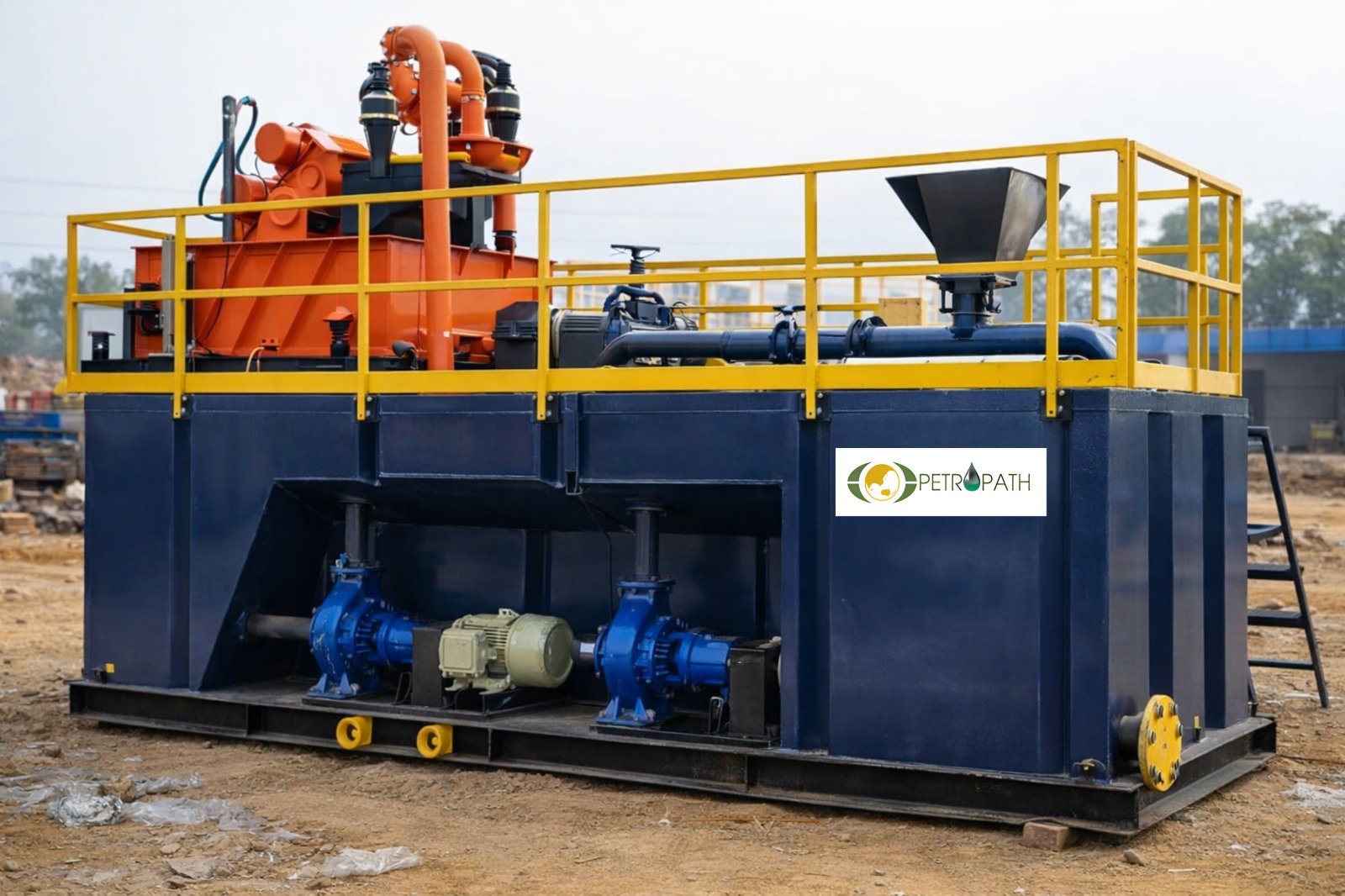
Mud Recycling Units are integrated systems designed to process used drilling mud by separating solids, removing contaminants, and conditioning the recovered fluid for reuse. Depending on the application, a recycling system may combine vibrating screens, hydrocyclones, desanders, desilters, centrifuges, pumps, tanks, and other treatment components.
The objective is simple: recover usable drilling fluid while efficiently removing unwanted solids.
By maintaining the quality of drilling mud, these systems can help drilling contractors reduce the need for fresh fluid and water while improving overall circulation performance.
Why Are Mud Recycling Units Important for Drilling?
During drilling, cuttings continuously enter the circulating fluid. If these solids are not removed, they can increase fluid density and viscosity beyond the required operating range. Excessive solids can also contribute to pump wear, poor hydraulic performance, and reduced drilling efficiency.
Mud Recycling Units address this challenge through continuous solids-control and fluid-treatment processes.
The major advantages include:
Reduced drilling fluid consumption
Lower waste transportation and disposal costs
Better control of mud properties
Reduced freshwater requirements
Improved drilling performance
Lower wear on pumps and drilling equipment
Greater operational efficiency
More sustainable drilling practices
Instead of treating used drilling mud as waste, contractors can recover a significant portion of the fluid and return it to the drilling circuit.
How Do Mud Recycling Units Work?
The exact configuration depends on the drilling application, soil conditions, mud characteristics, and required flow rate. However, most systems follow a multi-stage separation process.
1. Primary Screening
The contaminated drilling fluid first passes through a screening system, such as a shale shaker or vibrating screen. Larger drill cuttings and coarse solids are separated from the liquid phase.
2. Hydrocyclone Separation
The partially cleaned fluid can then pass through hydrocyclones. These units use centrifugal forces to separate finer sand and solid particles from the drilling fluid.
3. Fine Solids Removal
Desanders and desilters may be incorporated to remove progressively smaller solid particles. This stage is particularly important where maintaining precise drilling-fluid properties is critical.
4. Centrifugal Separation
For applications requiring additional solids control, high-speed centrifuges can remove very fine particles that remain suspended in the fluid.
5. Fluid Storage and Reuse
After treatment, the recovered drilling fluid is collected in storage tanks. It can then be conditioned and circulated back into the drilling operation.
This continuous recycling process creates a more efficient fluid-management cycle and reduces unnecessary disposal.
Applications of Mud Recycling Units
Horizontal Directional Drilling
HDD projects can generate substantial quantities of drilling slurry. Mud Recycling Units help contractors separate drilled solids and reuse valuable drilling fluid. This can reduce freshwater consumption and minimize slurry disposal requirements.
Geothermal Drilling
Geothermal projects require effective drilling-fluid management under challenging operating conditions. Recycling systems help maintain fluid quality while reducing waste and supporting more sustainable drilling practices.
Water Well Drilling
Water well projects generate drilling cuttings and slurry that must be effectively managed. A suitable recycling system can recover reusable fluid, reduce disposal volumes, and support stable borehole conditions.
Tunnel Boring and Slurry Treatment
Tunnel boring projects can generate significant slurry volumes. Recycling and separation equipment can process the slurry, recover usable liquid, and separate excavated solids for appropriate handling.
Piling and Pipe Jacking
Piling and pipe-jacking operations can also benefit from continuous fluid recovery. Recycling drilling mud reduces material consumption and can help maintain consistent fluid performance throughout the project.
Key Benefits of Mud Recycling Units
The biggest advantage of Mud Recycling Units is their ability to combine productivity with resource efficiency.
Cost Savings
Reusing drilling fluids can reduce the requirement for fresh mud, water, transportation, and waste disposal. Over large drilling projects, these savings can become significant.
Improved Drilling Performance
Cleaner drilling fluid can provide more consistent viscosity, density, and solids concentration. This supports effective circulation and can help improve drilling performance.
Reduced Environmental Impact
Recycling minimizes the amount of drilling slurry requiring disposal and can reduce freshwater consumption. This makes fluid recycling an important component of environmentally responsible drilling.
Equipment Protection
Excessive abrasive solids can accelerate wear on pumps, valves, pipelines, and drilling components. Effective solids removal can help reduce this exposure and support longer equipment service life.
Flexible Industrial Applications
From HDD and water wells to geothermal drilling, tunneling, piling, and other excavation activities, recycling systems can be configured according to project requirements.
Choosing the Right Drilling Fluid Recycling System
Selecting a suitable Mud Recycling Unit requires consideration of several technical factors, including drilling-fluid volume, flow rate, soil conditions, particle-size distribution, required solids-removal efficiency, available space, and project duration.
Contractors should also consider system capacity, ease of maintenance, component durability, automation requirements, and integration with existing drilling equipment.
A properly matched drilling fluid recycling system can provide better fluid control without unnecessarily increasing operating complexity.
Why Choose Petropath Fluids India Limited?
At Petropath Fluids India Limited, we provide drilling-fluid solutions designed to support efficient and reliable drilling operations. Our approach focuses on practical system design, dependable performance, and effective fluid management for demanding applications.
Whether the project involves HDD, geothermal drilling, water wells, tunneling, piling, or related drilling activities, the right drilling mud recycling equipment can help improve resource utilization and operational efficiency.
Conclusion
Mud Recycling Units provide a practical way to improve drilling-fluid management while reducing waste, operating expenses, and freshwater requirements. By combining screening, hydrocyclone separation, fine solids removal, and fluid recovery, these systems allow valuable drilling fluids to be reused instead of discarded.
As drilling projects increasingly prioritize efficiency and environmental responsibility, investing in an effective mud recycling system can provide long-term operational benefits. For contractors working across HDD, geothermal, water well, tunneling, piling, and other drilling applications, efficient fluid recycling is becoming an essential part of modern drilling operations.