

Beyond the Surface: 7 Smart Strategies for Oilfield Pipeline Corrosion Control
Oilfield Pipeline Corrosion Control is essential for maintaining the safety, efficiency, and long-term reliability of oil and gas transportation systems. Pipelines, production tubing, flow lines, storage facilities, and processing equipment are continuously exposed to challenging operating conditions. Water, dissolved salts, carbon dioxide (CO₂), hydrogen sulphide (H₂S), oxygen, and other corrosive substances can gradually damage metal surfaces, resulting in leaks, equipment failures, and expensive maintenance requirements.
For oil and gas operators, preventing corrosion is not simply a maintenance activity. It is an important part of protecting industrial assets, maintaining production continuity, and reducing operational risks. Implementing the right chemical treatment and monitoring practices can significantly improve pipeline performance.
Petropath Fluids India Ltd. provides specialised oilfield chemical solutions, including PP CORROSION INHIBITOR, designed to support internal corrosion protection in oil and gas infrastructure.
Understanding Pipeline Corrosion in Oil and Gas Operations
Pipeline corrosion is the gradual deterioration of metallic surfaces due to chemical or electrochemical reactions with their surrounding environment. In oil and gas operations, this process can become particularly challenging because transported fluids may contain water, acidic gases, dissolved minerals, and other reactive substances.
One of the primary causes is carbon dioxide corrosion. When CO₂ dissolves in water, it forms carbonic acid, which can attack carbon steel surfaces. Hydrogen sulphide can also contribute to corrosion-related damage, particularly in sour service environments.
Other contributing factors include:
Oxygen entering through maintenance activities or equipment connections.
High water content and stagnant water accumulation.
Dissolved salts and changing fluid chemistry.
Elevated operating temperatures and pressure.
Microbiologically influenced corrosion.
Deposits and sediments that create localised corrosion conditions.
A suitable Oil and Gas Pipeline Protection programme considers these operating conditions before selecting chemical treatments.
7 Smart Strategies for Better Oilfield Pipeline Corrosion Control
1. Identify Corrosion Risks Before They Become Failures
Effective prevention begins with understanding the pipeline’s operating environment. Operators should evaluate fluid composition, water cut, temperature, pressure, flow velocity, and the presence of corrosive gases.
Regular inspection and corrosion monitoring help identify areas where metal loss or localised damage may develop. Monitoring techniques can include corrosion coupons, electrical resistance probes, suitable inspection tools, and pipeline integrity assessments.
Understanding these conditions makes Oilfield Pipeline Corrosion Control more effective because chemical treatments can be selected according to actual field requirements rather than assumptions.
2. Use Film-Forming Chemical Treatments
Film-forming corrosion inhibitors are widely used in oilfield production systems because they help create a protective barrier between metal surfaces and corrosive fluids.
These chemicals contain active molecules that adsorb onto metal surfaces and form a protective film. This layer reduces direct contact between the steel and corrosive substances, helping slow down electrochemical corrosion reactions.
A suitable Film Forming Corrosion Inhibitor can support pipeline protection in systems handling crude oil, natural gas, and multiphase production fluids.
The effectiveness of the treatment depends on chemical compatibility, operating conditions, water distribution, inhibitor concentration, and the ability of the protective film to remain stable during operation.
3. Select Chemicals According to Operating Conditions
Not every pipeline operates under identical conditions. A chemical formulation that performs well in one production system may not provide the same results in another.
Before selecting an inhibitor, operators should consider:
CO₂ and H₂S concentrations.
Water content and water chemistry.
Operating temperature and pressure.
Fluid composition and flow characteristics.
Existing corrosion rates.
Compatibility with other production chemicals.
Proper selection is an important part of Oilfield Pipeline Corrosion Control because it helps ensure that the treatment is appropriate for the specific environment.
Laboratory testing, compatibility assessments, and field trials should be used to establish suitable treatment conditions.
4. Maintain Consistent Chemical Injection
Even an appropriately selected corrosion inhibitor may provide inconsistent protection if its injection programme is poorly managed.
Continuous injection is commonly used where pipelines require ongoing chemical protection. Batch treatment can also be considered depending on pipeline design, operating conditions, and the selected chemical formulation.
Common injection approaches include:
Continuous chemical injection pumps.
Wellhead chemical injection systems.
Downhole capillary injection.
Batch treatment programmes.
Suitable pipeline pigging treatment procedures.
The dosage must be determined through technical evaluation and field monitoring. Factors such as water cut, flow rate, corrosive gas concentration, and existing corrosion conditions influence chemical requirements.
For the PP CORROSION INHIBITOR product listed by Petropath, the existing product page specifies a typical treatment range of 25–200 ppm. This is a product-specific reference range, not a universal dosage recommendation. Actual application should be confirmed through field testing and technical guidance.
5. Control Water Accumulation and Pipeline Deposits
Water accumulation is a significant contributor to internal pipeline corrosion. When water settles in low-flow sections, it can create an environment where corrosive reactions develop more rapidly.
Deposits and sediments can also create localised conditions beneath which corrosion becomes difficult to detect.
Operators should consider effective pipeline pigging, water management, appropriate drainage practices, and regular inspection as part of their maintenance programme.
Combining these practices with suitable Pipeline Corrosion Prevention chemicals provides a more comprehensive approach than depending on chemical treatment alone.
6. Monitor Performance and Adjust Treatment
Corrosion management should be an ongoing process rather than a one-time chemical application.
Regular monitoring helps determine whether the selected treatment is performing as expected. Corrosion coupons, monitoring probes, inspection records, and operating data can provide valuable information about changes in pipeline conditions.
Operators should review treatment performance whenever there are significant changes in production rates, fluid composition, temperature, pressure, or water content.
A structured Oilfield Pipeline Corrosion Control programme should use monitoring results to guide dosage adjustments, maintenance activities, and chemical treatment improvements.
7. Work with Experienced Oilfield Chemical Suppliers
Selecting a suitable chemical supplier is another important consideration for pipeline protection. Operators need access to consistent formulations, technical information, product handling guidance, and application support.
Experienced suppliers can help evaluate operational requirements and recommend appropriate chemical solutions based on the available field information.
Working with specialised Oilfield Production Chemicals suppliers also helps operators establish a more organised approach to chemical procurement, application, and performance evaluation.
How PP CORROSION INHIBITOR Supports Pipeline Protection
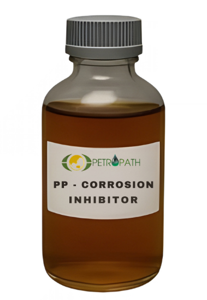
Petropath Fluids India Ltd. offers PP CORROSION INHIBITOR, a specialised chemical solution developed for internal corrosion protection in oilfield production and transportation systems.
According to the product information, its formulation uses film-forming organic inhibitor molecules that attach to metal surfaces and help establish a protective barrier.
The product is intended for applications involving:
Crude oil and natural gas pipelines.
Production tubing and casing.
Wellhead and flow line systems.
Multiphase transportation pipelines.
Oil storage and transfer infrastructure.
Produced water and injection systems.
The published product specifications include an oil-soluble formulation, a dark brown liquid appearance, a typical density of 0.85–0.95 g/cm³, and active content of 40–70%.
The product page also lists industrial packaging options, including 200-litre HDPE drums and 1,000-litre IBC containers.
These specifications and application details should be reviewed against the latest technical data sheet and actual operating requirements before use.
Why Proactive Corrosion Management Matters
Corrosion-related failures can affect more than pipeline surfaces. They can interrupt production, increase maintenance expenses, create environmental concerns, and compromise operational safety.
A proactive approach combines chemical treatment, pipeline inspection, water management, monitoring, and maintenance planning.
For operators managing complex production and transportation infrastructure, Oilfield Pipeline Corrosion Control helps establish a systematic approach to protecting assets and improving operational reliability.
Rather than waiting for visible damage or unexpected failures, businesses can identify corrosion risks early and implement suitable preventive measures.
Conclusion
Reliable pipeline performance depends on understanding corrosion mechanisms and applying appropriate protection strategies. From selecting film-forming chemicals to maintaining consistent injection, controlling water accumulation, and monitoring treatment effectiveness, every step contributes to better pipeline integrity.
Petropath Fluids India Ltd. supports oilfield operations with specialised chemical solutions such as PP CORROSION INHIBITOR, designed to help protect internal metal surfaces in demanding production environments.
For businesses seeking dependable Oil and Gas Pipeline Protection solutions, choosing the right chemical treatment and working with an experienced oilfield chemical supplier can make a meaningful difference to long-term asset management.
Looking for a suitable corrosion protection chemical for your oilfield operations? Contact Petropath Fluids India Ltd. for product information, technical guidance, and bulk supply enquiries.